
Lithium-ion batteries are generally better than lead-acid batteries for solar and inverter backup systems because they charge faster, last longer, and require very little maintenance. Lead-acid batteries remain a budget-friendly option but have shorter lifespan and slower charging speed.
As more homes begin using solar panels and inverter backup systems, many people start asking the same question: should I choose a lithium-ion battery or a traditional lead-acid battery?
Both battery types can store electricity for use when grid power is unavailable. However, the way they operate and the benefits they offer are quite different. Knowing these differences can make it much easier to select the right battery for your home backup system, solar installation, or small energy storage setup.
In this article, we’ll look at how lithium-ion batteries compare with lead-acid batteries (Lithium-Ion vs Lead-Acid Batteries), explain why lithium batteries usually charge faster, and discuss which option may be better depending on your needs and budget.
A Quick Look at Lead-Acid Batteries
Among rechargeable battery technologies, lead-acid batteries are some of the oldest and remain in use even now. They were first developed more than a century ago and continue to be used in vehicles, backup power systems, and many industrial applications.
These batteries store energy using lead plates immersed in an electrolyte solution made of sulfuric acid. When the battery is charged or discharged, a chemical reaction takes place between these components, allowing the battery to store or release electricity.
Because the technology has been around for so long, lead-acid batteries have built a strong reputation for being reliable and relatively inexpensive.
Benefits of Lead-Acid Batteries
Lead-acid batteries are still widely used for several reasons.
Affordable upfront cost
Compared with lithium batteries, lead-acid batteries usually cost less initially, making them attractive for budget-conscious users.
Proven and familiar technology
Since this technology has been used for decades, it is well understood and easily available in most markets.
High current capability
Lead-acid batteries can supply large bursts of current when required, which is useful for certain applications.
Tolerance to temperature variations
They can function in a wide range of temperatures, even though extreme conditions may affect performance.
Easy availability and replacement
Because they are so common, replacement batteries and spare parts are easy to find.
For these reasons, many homes in India still rely on lead-acid batteries paired with inverter systems.
Limitations of Lead-Acid Batteries
Despite their reliability, lead-acid batteries do have several drawbacks.
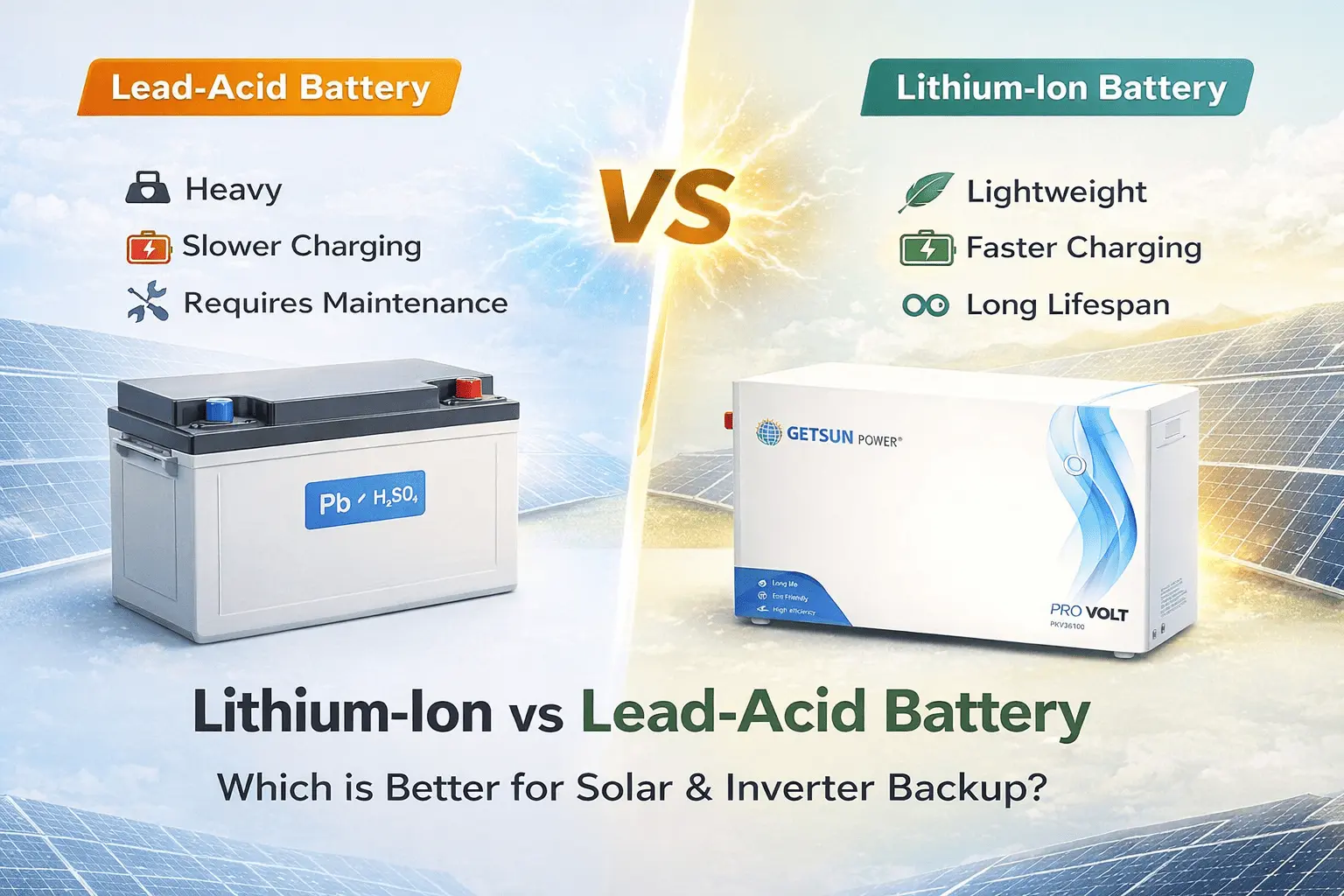
They tend to be heavy and bulky, which makes installation more difficult. Routine maintenance is required, such as inspecting water levels and ensuring the battery connections remain clean.
Another limitation is how deeply they can be discharged. Typically, lead-acid batteries should only use around 50% of their available capacity to maintain good battery health. Doing so frequently can reduce their lifespan.
They also tend to charge more slowly and generally do not last as long as lithium batteries.
What Are Lithium-Ion Batteries?
Lithium-ion batteries represent a newer generation of battery technology. Over the past two decades, they have become widely used in electronics and energy storage systems.
You will find lithium-ion batteries in devices such as:
- Smartphones
- Laptop computers
- Electric vehicles
- Solar energy storage systems
- Home inverter backup systems
Instead of using lead plates and liquid acid, lithium-ion batteries store energy by allowing lithium ions to move between two electrodes during charging and discharging.
This design allows lithium batteries to store more energy in a compact space.
Why Lithium Batteries Are More Preferred for Home and Solar Systems
Many homeowners are now switching to lithium batteries when upgrading their inverter or solar systems. Several features make them attractive for modern energy setups.
Higher Energy Density
Lithium batteries can store a large amount of energy in a relatively small battery pack. This makes them lighter and more compact compared with lead-acid batteries of similar capacity.
For homes with limited installation space, this is a significant advantage.
Greater Usable Capacity
A typical lead-acid battery should only use about 50% of its stored energy to maintain long life.
Lithium batteries can safely use around 80–90% of their stored capacity, which means you get more usable energy from the same battery size.
Longer Service Life
Compared to traditional batteries, lithium-ion batteries are known for their extended lifespan. Depending on the battery chemistry and usage pattern, they can provide thousands of charge cycles.
Lead-acid batteries usually deliver far fewer cycles before their performance begins to decline.
Because of this, lithium batteries often end up being more economical over the long term, even if their initial cost is higher.
Very Little Maintenance
Lead-acid batteries often require routine checks. Users may need to monitor water levels, inspect the electrolyte, and clean the battery terminals.
Lithium batteries are sealed systems, which means they do not require this kind of maintenance. Once the system is in place, it usually operates on its own with little maintenance.
Faster Charging
One of the most noticeable advantages of lithium batteries is how quickly they recharge. This characteristic becomes particularly important in solar systems where batteries must capture energy during limited sunlight hours.
What Makes Lithium Batteries Charge Faster Than Lead-Acid Batteries?
The difference in charging speed mainly comes down to how each battery technology works internally.
More Efficient Chemical Processes
Lithium-ion batteries rely on a highly efficient electrochemical process that allows energy to move quickly through the battery during charging.
Lead-acid batteries depend on slower chemical reactions between lead plates and electrolyte, which naturally limits how quickly they can store energy.
Lower Internal Resistance
Lithium batteries have much lower internal resistance compared with lead-acid batteries. Because electricity can flow more easily, they accept charge at a faster rate.
Lead-acid batteries generate more heat during charging, which slows the process and reduces efficiency.
Higher Charging Efficiency
Lithium batteries are typically over 90% efficient during charging. This means most of the electricity used for charging is actually stored in the battery.
Lead-acid batteries are less efficient, and part of the charging energy is lost during the process. As a result, they take longer to reach full capacity.
Safety Considerations
Safety is an important topic whenever batteries are discussed.
Some lithium battery chemistries can be sensitive to overheating if not properly managed. For this reason, most modern lithium battery systems include a Battery Management System (BMS).
A Battery Management System (BMS) keeps the battery safe by continuously monitoring its operation and preventing issues such as:
- overcharging
- deep discharge
- excessive current
- overheating
Another widely used lithium chemistry is Lithium Iron Phosphate (LiFePO₄). These batteries are known for their stability and are commonly used in solar energy storage applications.
Comparing Costs Lithium-Ion vs Lead-Acid Batteries
Lead-acid batteries continue to be popular mainly because they cost less initially.
Lithium batteries typically require a higher upfront investment. However, their longer lifespan, higher efficiency, and minimal maintenance often make them more economical over time.
The final choice usually depends on budget, usage patterns, and system requirements.
Which Battery Is Better for Solar Storage? (Lithium-Ion vs Lead-Acid Batteries )
The right choice mainly depends on your particular power needs and usage.
Lead-acid batteries may be a good option if you need an affordable backup system and do not mind periodic maintenance.
Lithium batteries may be the better choice if you want a system that offers longer lifespan, faster charging, and minimal upkeep.
For many modern solar installations, lithium batteries have become the preferred option because they work efficiently with hybrid solar inverters and advanced energy storage systems.
Final Thoughts
Lithium-ion and lead-acid batteries each offer different advantages, depending on the application, budget, and energy storage needs.
Lead-acid batteries remain a dependable and affordable solution for basic backup power systems. Lithium batteries, however, offer several advantages that suit modern energy needs, including longer life, higher efficiency, faster charging, and reduced maintenance.
As solar energy and home energy storage systems continue to grow in popularity, lithium battery technology is becoming an increasingly common choice.
If you are considering upgrading your inverter system or installing a solar energy storage solution, selecting the right battery technology will play a key role in the system’s performance and long-term value.
At PowerKart, we provide reliable energy solutions including lithium-ion batteries, hybrid solar inverters, and EV battery systems designed for modern homes and businesses. Whether you need a solar storage battery or a lithium battery for an electric scooter, our team can help you choose the right option for your energy needs.
FAQs
1. Which type of battery is best for a solar system?
Lithium batteries, especially LiFePO4 (Lithium Iron Phosphate) batteries, are generally considered the best option for modern solar systems. They last longer, charge faster, require very little maintenance, and provide higher efficiency compared to traditional batteries. However, lead-acid batteries are still used in some systems because they are cheaper initially, although they usually have a shorter lifespan and require more maintenance.
2.What are the best batteries for solar?
The best batteries for solar systems are usually lithium batteries, especially LiFePO4 (Lithium Iron Phosphate) batteries. They offer a longer lifespan, higher efficiency, faster charging, and require very little maintenance compared to traditional batteries. While lead-acid batteries are cheaper initially, lithium batteries are often preferred for modern solar systems because they last longer and provide better performance.
3.Which solar battery lasts the longest?
Lithium Iron Phosphate (LiFePO4) batteries usually last the longest in solar systems. They typically have a lifespan of about 10 to 15 years or even more with proper usage. In comparison, traditional lead-acid batteries usually last around 3 to 5 years. Because of their longer lifespan, higher efficiency, and low maintenance, LiFePO4 batteries are often considered the best long-term option for modern solar systems.
4.Which type of battery is best?
The best type of battery depends on the application, but lithium batteries—especially Lithium Iron Phosphate (LiFePO4)—are generally considered the best for many modern uses such as solar systems and electric vehicles. They offer a long lifespan (about 10–15 years), higher efficiency, faster charging, and low maintenance compared to traditional batteries like lead-acid, which usually last around 3–5 years.
5.What is the safest home solar battery?
For most homes installing solar today, LiFePO4 batteries are considered the safest choice for energy storage.