
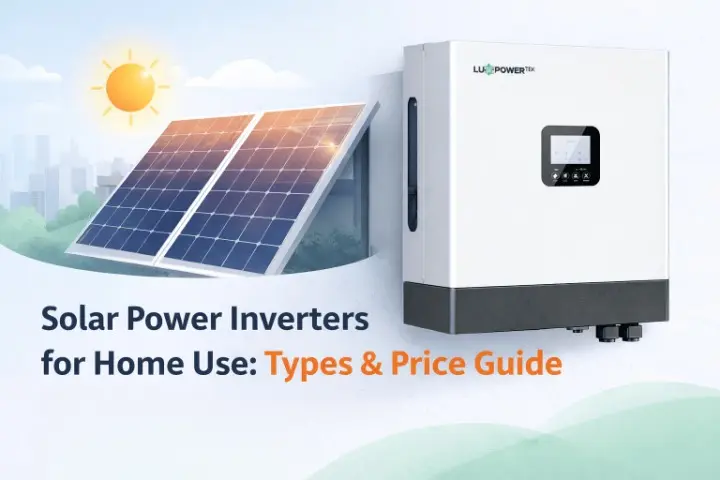
Thinking of Buying Solar Power Inverters for Home Use? Read This First
If you are planning to install a solar panel system at home, you’ve probably heard people talking about panels, batteries, and savings. But there’s one component that quietly controls everything—and most people don’t fully understand it.
That component is the solar power inverter.
Many homeowners focus only on solar panels, thinking they are the main part of the system. While panels generate electricity, they cannot power your home directly. Without solar power inverters for home use your solar setup is incomplete.
In this guide, we’ll break down everything in a simple and practical way:
- What a solar inverter actually does
- Why it is the most important part of your system
- Types of inverters and how to choose one
- Why hybrid solar inverters are becoming popular for home use
- How this applies specifically to homes in Bangalore
Let’s start from the basics.
⚡ What are Solar Power Inverters?
A solar power inverter is a device that converts the electricity generated by solar panels into a form that your home can actually use.
Here’s the simple reality:
- Solar panels produce DC (Direct Current) electricity
- Your home appliances run on AC (Alternating Current)
This is where the inverter comes in.
👉 The inverter converts DC electricity into AC electricity so that:
- Lights turn on
- Fans run smoothly
- TVs and refrigerators work properly
- All your home appliances function normally
Without this conversion, solar energy cannot be used inside your home.
👉 In simple terms:
Solar panels generate power, but the inverter makes that power usable.
🧠 Why Is the Solar power Inverter So Important?
Many people assume the solar inverter is just a “converter,” but in reality, it does much more.
That’s why it is often called the “brain” of the solar system.
🔌 1. Power Conversion (Core Function)
The most basic job is converting DC to AC. But it must do this efficiently.
A good inverter ensures:
- Stable output
- Minimal energy loss
- Smooth operation of appliances
Poor-quality inverters can waste energy and even damage sensitive devices.
📊 2. System Monitoring & Control
Modern inverters are smart devices.
They track:
- Solar generation
- Battery charging
- Grid usage
- Energy consumption
Many even come with mobile apps where you can see:
👉 “How much energy did my solar system generate today?”
This gives you full control over your energy usage.
🛡️ 3. Safety Protection
Safety is critical in any electrical system.
Inverters protect your home by:
- Preventing overload
- Avoiding short circuits
- Managing voltage fluctuations
- Ensuring grid synchronization
Without these protections, your system could become unsafe.
🔋 4. Energy Management (Most Important Today)
In modern systems, especially hybrid ones, the inverter decides:
Where should power come from?
- Solar panels ☀️
- Battery 🔋
- Grid ⚡
This intelligent switching is what makes solar systems efficient.
🔄 Types of Solar power Inverters for Homes
The best solar power inverter for you depends on what you need. There are three main types.
1️⃣ Grid-Tied Inverter
This is the simplest and most affordable option.
How Grid-Tied Inverter works:
- Uses solar power during the day
- Sends excess electricity to the grid
Limitations of Grid-Tied Inverter:
- No backup during power cuts
- System shuts down when grid fails
👉 Best for:
- People who want to reduce electricity bills only
2️⃣ Hybrid Solar Inverter (Most Popular Today)
This is the most efficient and practical choice
How Hybrid Solar Inverter works:
- Uses solar power first
- Stores extra energy in batteries
- Uses grid only when needed
Benefits of Hybrid Solar Inverter:
- Lower electricity bills
- Backup during power cuts
- Better energy management
👉 Best for:
- Homes that want both savings + backup
3️⃣ Off-Grid Inverter
Used in areas without grid connection.
Features of Off-grid Hybrid Solar Inverter:
- Fully independent system
- Requires battery storage
👉 Best for:
- Remote locations
⚠️ Why Choosing the Right solar power Inverter for home Matters
Many people make the mistake of focusing only on solar panels.
But in reality, the inverter determines:
- System efficiency
- Battery life
- Power quality
- Backup performance
✔ What a Good Inverter Ensures
- Stable voltage for electronics
- Longer battery lifespan
- Smooth switching during outages
- Maximum use of solar energy
❌ What Happens with a Poor Inverter
- Energy loss
- Battery damage
- Frequent breakdowns
- Poor performance
👉 So choosing the right inverter is not optional—it’s critical.
🔋 How Beneficial Is a Hybrid Solar Inverter?
Now let’s focus on what really matters to most people
👉 Is a hybrid inverter worth it?
Short answer: Yes, for most homes, it absolutely is.
🔌 1. Best of Both Worlds
A hybrid inverter works with:
- Solar panels
- Battery storage
- Grid supply
This gives you:
✔ Lower bills
✔ Backup power
✔ Energy independence
📈 2. Smart Energy Usage
Hybrid inverters decide:
- When to use solar
- When to store energy
- When to use grid
This reduces energy waste and improves efficiency.
💰 3. Better Long-Term Savings
With hybrid systems:
- You make better use of your own solar power energy
- You depend less on the grid
- Your savings increase over time
🔋 4. Reliable Backup
With a battery:
- Lights stay on during power cuts
- Essential appliances continue running
- No need for generators
👉 This makes hybrid systems extremely practical.
🏙️ Why Hybrid Inverters Make Sense in Bangalore
Now let’s look at a real-world context.
⚡ 1. High Electricity Costs
Electricity tariffs in Bangalore are relatively high.
With a hybrid system:
- You use solar first (free energy)
- Store excess in batteries
- Use grid only when needed
👉 This reduces your monthly bill significantly.
🏠 2. Typical Home Usage Pattern
A normal Bangalore home uses:
- Lights and fans
- Refrigerator
- TV and appliances
- Work-from-home devices
- Occasional AC
A hybrid inverter:
- Manages all these loads efficiently
- Reduces grid dependency
- Provides backup
💰 3. Faster Payback
With good sunlight availability:
- Solar generates well
- Batteries store excess energy
- Evening usage is covered
👉 Typical payback:
4–6 years
🔋 4. Better Than Traditional Battery Systems
Old setups (UPS + battery) have problems:
- Inefficient charging
- Poor power quality
- Higher energy loss
Hybrid systems solve these issues.
📊 Real Example (Bangalore Scenario)
Let’s say:
Monthly bill: ₹6,000
With solar + hybrid inverter:
- Solar covers daytime usage
- Battery supports evening
👉 New bill:
₹2,000–₹3,000
👉 Savings:
₹3,000–₹4,000 per month
🧠 Simple Comparison
| Goal | Best Option |
| Only bill reduction | Grid-tied inverter |
| Bill + backup + reliability | Hybrid solar inverter |
| No grid available | Off-grid inverter |
🔍 Common Mistakes People Make
Avoid these mistakes:
❌ Choosing cheapest inverter
Cheap systems fail early.
❌ Ignoring battery compatibility
Not all inverters support lithium batteries properly.
❌ Oversizing or undersizing
Wrong sizing reduces efficiency.
❌ Ignoring brand/service
After-sales support is very important.
🛠️ How to Choose the Right Solar Inverter for Your Home
Choosing the right solar power inverter for home is one of the most important decisions when setting up a solar system. Many people focus only on panels, but in reality, the solar inverter controls how efficiently your entire system performs.
Here’s a practical way to think about it — instead of choosing randomly, match the inverter to your actual needs.
⚡ 1. Understand Your Electricity Usage
Start with your monthly electricity bill.
If your usage is low (₹1,500–₹3,000/month), a basic solar inverter for home with a smaller capacity may be enough.
But if your bill is higher (₹5,000–₹10,000+), especially with:
- Air conditioners
- Geysers
- Washing machines
- Work-from-home setups
👉 Then you need a more powerful system, possibly:
- A best hybrid solar inverter
- Or even a three phase solar inverter (for large homes or villas)
Also, your inverter capacity should match your solar system size. A mismatch can lead to energy loss or system inefficiency.
🔋 2. Decide If You Need Backup Power
This is where most homeowners get confused.
Ask yourself:
👉 Do I need electricity during power cuts?
If your answer is NO:
- A simple on grid solar inverter is enough
- It reduces your electricity bill
- But it will not work during outages
If your answer is YES:
- Go for the best inverter with battery for home
- This usually means a hybrid solar inverter
A hybrid system:
- Stores excess solar energy
- Gives backup during power cuts
- Reduces dependency on the grid
In cities like Bangalore, where outages still happen in some areas, this becomes a very practical choice.
💰 3. Check Solar Inverter Price vs Value
Price matters—but choosing the cheapest option can cost you more later.
The solar inverter price depends on:
- Capacity (kW rating)
- Technology (on-grid / hybrid / off-grid)
- Brand and features
👉 Rough idea:
- On-grid inverter: Lower cost
- Hybrid inverter: Medium to high cost
- Off-grid inverter: Depends on battery setup
Instead of asking:
❌ “What is the cheapest inverter?”
Ask:
✅ “Which inverter gives the best long-term value?”
A slightly higher investment today can mean:
- Better efficiency
- Longer life
- Fewer problems
🔋 4. Choose the Right Battery Type (If Needed)
If you are planning backup, battery compatibility is critical.
Modern systems mostly use lithium batteries, so your inverter should support them properly.
For example:
- A 48V off grid inverter is commonly used with lithium battery systems
- It provides stable performance and better efficiency
Older systems using lead-acid batteries:
- Require maintenance
- Have shorter lifespan
👉 So if your budget allows, go for:
Hybrid inverter + lithium battery setup
This gives:
- Better performance
- Longer life
- Less maintenance
⚙️ 5. Think About Future Expansion
Many people install a small system and later want to expand.
So ask:
👉 Will I add more panels later?
👉 Will I add a battery in future?
If yes:
- Choose an inverter that supports expansion
- A best hybrid solar inverter is usually more flexible
This avoids:
- Replacing the inverter later
- Extra installation cost
🔌 6. Choose the Right Technology
There are different inverter technologies available today.
🔹 High Frequency Solar Inverter
- Compact and lightweight
- Faster switching
- Better efficiency
👉 Suitable for:
- Modern homes
- Hybrid systems
🔹 Low Frequency (Traditional)
- Heavier
- More durable in rough conditions
👉 Used in:
- Industrial or heavy-duty setups
👉 For most homes today:
High frequency solar inverter is the preferred choice
🏢 7. Single Phase vs Three Phase
This depends on your electrical connection.
✔ Single Phase Hybrid Solar inverter
- Normal homes
- Lower load
✔ Three Phase Solar Inverter
- Large homes
- Apartments
- Commercial setups
👉 If your connection is 3-phase, always choose:
Three phase solar inverter
🏆 8. Brand, Warranty & Service Support
This is something many people ignore—and regret later.
Always choose:
- A trusted brand or company of Solar Energy solutions
- Minimum 5-year warranty (or more)
- Good local service support
Because:
👉 Even the best inverter may need servicing over time
If support is not available:
- Repairs become difficult
- Downtime increases
📌 Simple Final Checklist
Before finalizing your inverter, make sure:
✔ It matches your electricity usage
✔ It supports your backup requirement
✔ It fits your budget (not just cheapest)
✔ It is compatible with your battery
✔ It allows future expansion
✔ It is from a reliable brand
Choosing the right inverter is not about buying the most expensive or the most popular one.
It’s about choosing the one that fits your home, your usage, and your long-term goals.
👉 A well-chosen inverter will:
Give better return on investment
Save more electricity
Provide reliable backup
Last longer
🔚 Final Thoughts
A solar inverter is not just a small part of your system—it is the core decision.
- It controls how your solar system behaves
- It determines your savings
- It affects your comfort during power cuts
📌 Simple Summary
- Solar panels generate power
- The inverter makes it usable
- Hybrid inverters add intelligence + backup
👉 If you are planning solar:
Don’t just focus on panels—choose the right inverter.
That one decision can make the difference between:
- A system that just works
- And a system that truly delivers value
🚀 Conclusion
In today’s world, where electricity costs are rising and power reliability matters, a hybrid solar inverter is no longer a luxury—it’s a smart investment.
Especially in cities like Bangalore, it offers:
- Cost savings
- Energy independence
- Reliable backup
👉 If you want a solar system that is practical, efficient, and future-ready, a hybrid inverter is one of the best choices you can make.
❓ Common Questions About Solar power Inverters for home
What happens if you don’t install an solar power inverter for home?
Without an solar inverter, the electricity generated by solar panels cannot be used in your home. This is because solar panels produce DC power, while household appliances operate on AC power.
Which type of solar power inverter is best for home use?
For most homes, a hybrid solar inverter is a great choice. It not only helps reduce electricity bills but also provides backup power during outages, making it a more complete solution.
Do solar inverters work during the night?
Solar panels stop generating power after sunset. However, if your system includes a battery, the inverter can use stored energy to power your home even after sunset.
How long does a solar power inverter last?
A typical solar inverter lasts around 8 to 12 years. Its lifespan can vary depending on the brand, usage, and maintenance.
What happens if your solar inverter fails but panels are still working?
If the inverter stops working, your solar panels will continue to generate electricity, but that power cannot be used in your home. This is because the electricity produced is in DC form, and without the inverter, it cannot be converted into usable AC power. If the inverter fails, your solar system becomes unusable until it is repaired or replaced.
Which is more important for home solar power: panels or inverter?
Both are essential, but if you had to choose, the inverter is more critical for actual usage.
Solar panels generate electricity, but the inverter is what makes that electricity usable in your home. Without a working inverter, even the best panels cannot power your appliances.
Do you need solar panels or an inverter first for a home solar setup?
In practice, you don’t install one before the other—they are planned and installed together as part of a complete system. However, the process usually starts by deciding your solar panel capacity based on your electricity needs, and then selecting an inverter that matches that setup.