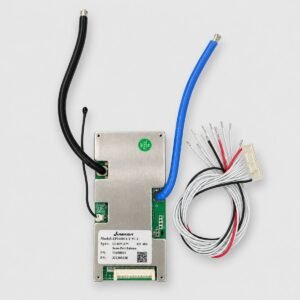
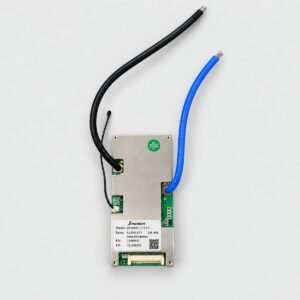
1. Product Overview
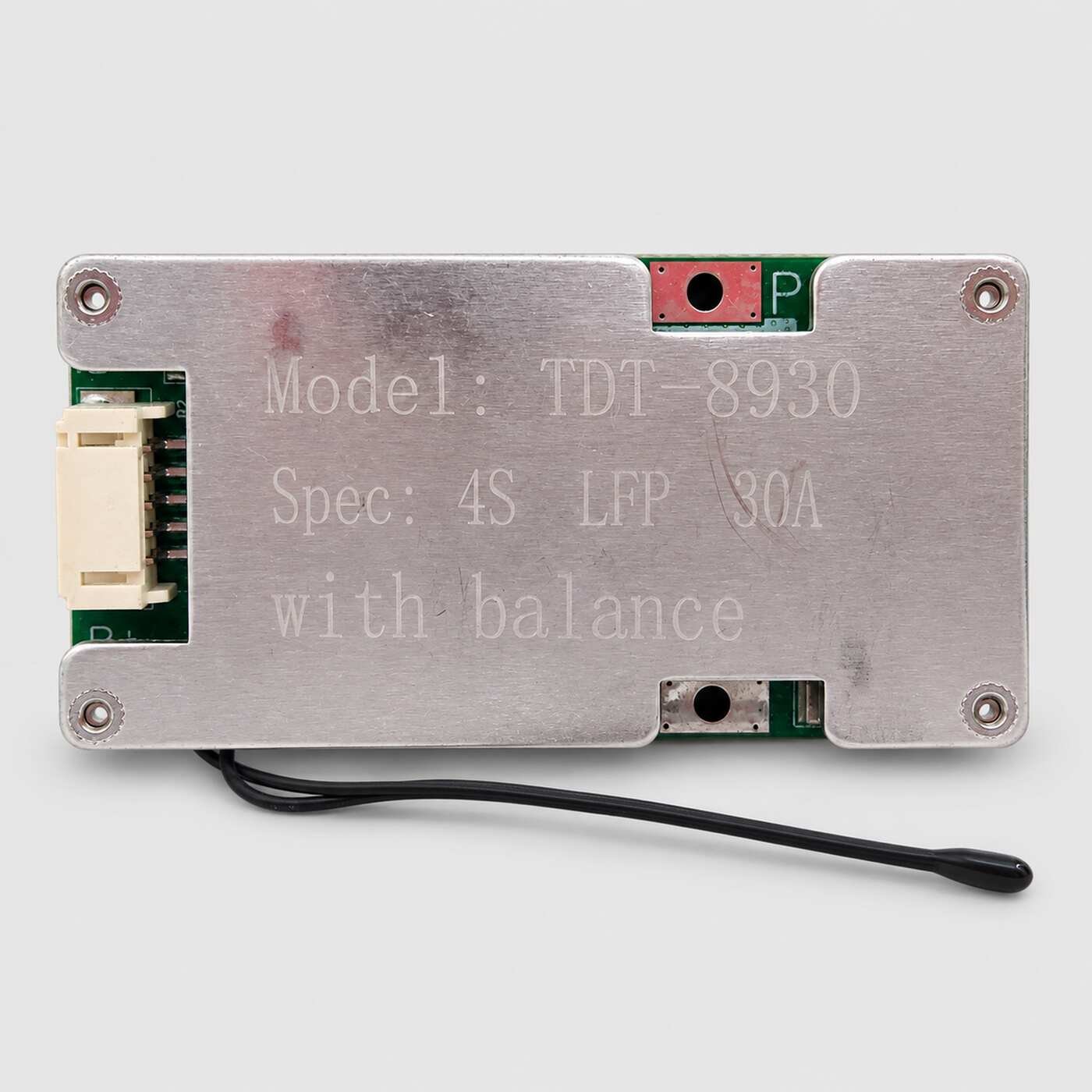
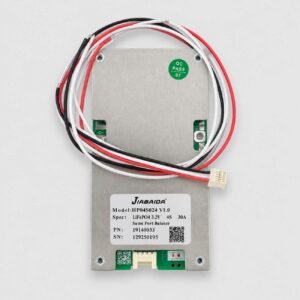
The TDT-8930 is a Battery Management System designed for four LiFePO4 cells or parallel cell groups connected in series.
It is marked for a 4S LiFePO4 configuration with a 30A current rating and an integrated cell-balancing function. A completed 4S LiFePO4 battery has a nominal voltage of approximately 12.8V and a typical maximum charging voltage of 14.6V.
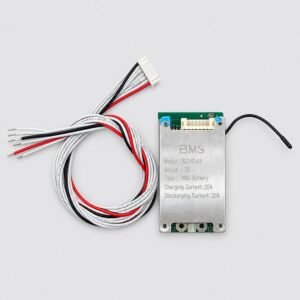
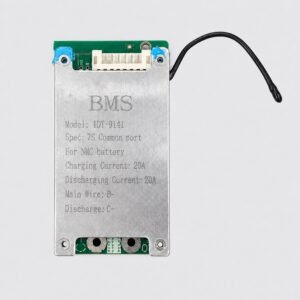
The board is enclosed between metal plates that protect the electronic components and assist with heat distribution. A cell-sensing connector and black temperature-sensor lead are visibly fitted.
2. Technical Specifications
| Specification |
Details |
| Brand |
TDT |
| Model |
TDT-8930 |
| Product type |
Hardware Battery Management System |
| Battery chemistry |
LiFePO4 / LFP |
| Cell configuration |
4S |
| Nominal cell voltage |
3.2V |
| Nominal pack voltage |
12.8V |
| Maximum pack charging voltage |
14.6V |
| Current rating marked on BMS |
30A |
| Port configuration |
Same port |
| Cell balancing |
Included |
| Cell-sensing connector |
Fitted |
| Temperature sensor |
Black sensor lead fitted |
| Protective covering |
Metal heat-spreader plates |
| Bluetooth connectivity |
No |
| Communication interface |
Not provided |
| Exact balancing current |
Not specified |
| Peak-current rating |
Not specified |
| Exact protection thresholds |
Not specified |
3. Main Features
- Designed specifically for 4S LiFePO4 battery packs
- Suitable for 3.2V LiFePO4 cells
- 30A current rating marked on the casing
- Integrated cell-voltage balancing
- Same-port charging and discharging arrangement
- Plug-in cell-sensing connector
- Pre-fitted temperature-sensor lead
- Metal casing for component protection and heat distribution
- Compact construction for internal battery-pack installation
- Suitable for new battery assemblies and compatible repair work
4. Typical Protection Functions
A compatible BMS of this type is intended to manage battery-pack conditions such as:
- Individual-cell overcharging
- Individual-cell over-discharging
- Excessive discharge current
- Output short circuit
- Abnormal battery temperature
- Voltage differences between series cell groups
The exact triggering voltages, delay times, recovery behaviour, balancing current and temperature limits are not printed on the visible casing and should be confirmed before specialised applications.
5. Connection Information
The white multi-pin connector is used for monitoring the voltage of the four series-connected cell groups.
Before connecting the BMS:
- Identify the battery-negative connection.
- Identify each intermediate series-cell junction.
- Identify the battery-positive connection.
- Confirm the sensing-wire sequence using a multimeter.
- Verify that each adjacent connection measures approximately one cell voltage.
- Confirm the total pack voltage before connecting a charger or load.
- Follow the wiring diagram supplied for this exact BMS version.
Never determine the sensing-wire sequence solely from wire colour or connector position. Incorrect wiring can permanently damage the BMS.
6. Suitable Applications
This BMS may be suitable for compatible 4S LiFePO4 battery packs used in:
- 12.8V rechargeable battery packs
- Solar-lighting systems
- UPS and emergency backup batteries
- Portable power equipment
- Robotics and automation projects
- LED lighting systems
- Communication equipment
- DIY LiFePO4 battery assemblies
- Battery repair and replacement applications
- Other compatible 12V-class DC equipment
Suitability depends on the equipment’s continuous current, starting current, charging system and battery-cell specifications.
7. Compatibility Requirements
Use this BMS only when:
- The battery chemistry is LiFePO4.
- The pack contains exactly four series-connected cell groups.
- Each cell has a nominal voltage of approximately 3.2V.
- The charger is designed for a 4S LiFePO4 battery.
- The charger’s maximum output voltage does not exceed 14.6V.
- The required operating current is within the verified BMS rating.
- The peak or starting current does not exceed the supported limit.
- The sensing connector and wire sequence match the battery assembly.
- The BMS dimensions fit inside the battery enclosure.
This BMS is not suitable for conventional 4S lithium-ion, NMC or LiPo packs charged to 16.8V. Those cells require different charging and protection-voltage thresholds.
8. Installation Guidance
- Match and balance all four cell groups before assembly.
- Measure every cell-group voltage with a multimeter.
- Connect the cell-sensing points in the correct sequence.
- Secure all high-current electrical connections.
- Use appropriately rated cables, nickel strips and terminals.
- Place the temperature sensor securely against the battery cells.
- Keep the metal casing electrically isolated from exposed battery terminals.
- Insulate all connections after assembly.
- Prevent wires from being pinched by the battery enclosure.
- Confirm correct pack voltage before connecting a charger or load.
- Use only a charger intended for 4S LiFePO4 batteries.
9. Important Current-Rating Note
The casing is marked 30A, but practical operating capability can also depend on:
- Battery-cell current capability
- Ambient temperature
- Cooling and airflow
- Connection resistance
- Cable thickness
- Nickel-strip capacity
- Duration of the load
- Battery-enclosure design
- Equipment starting or surge current
Allow a suitable safety margin for motors, pumps, inverters and other equipment with high starting-current requirements.
10. Safety Information
- Incorrect sensing-wire order can immediately damage the BMS.
- Do not reverse the battery polarity.
- Do not short-circuit the power terminals.
- Do not use the BMS with incompatible battery chemistry.
- Never charge a 4S LiFePO4 battery above 14.6V.
- Do not exceed the verified ratings of the BMS, battery cells or wiring.
- Keep the board away from water, conductive debris and loose metal objects.
- Stop using the BMS if it becomes damaged, burnt or unusually hot.
- Battery-pack assembly should be performed by a person familiar with lithium-battery wiring and safety.