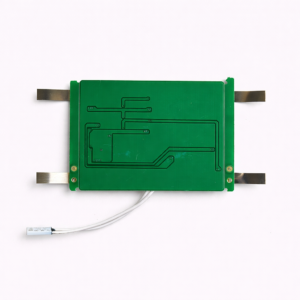
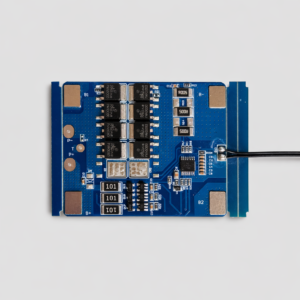
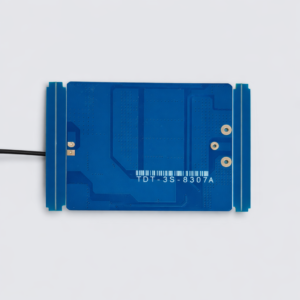
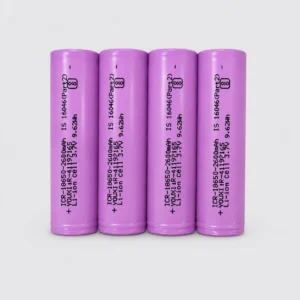
1. Product Overview
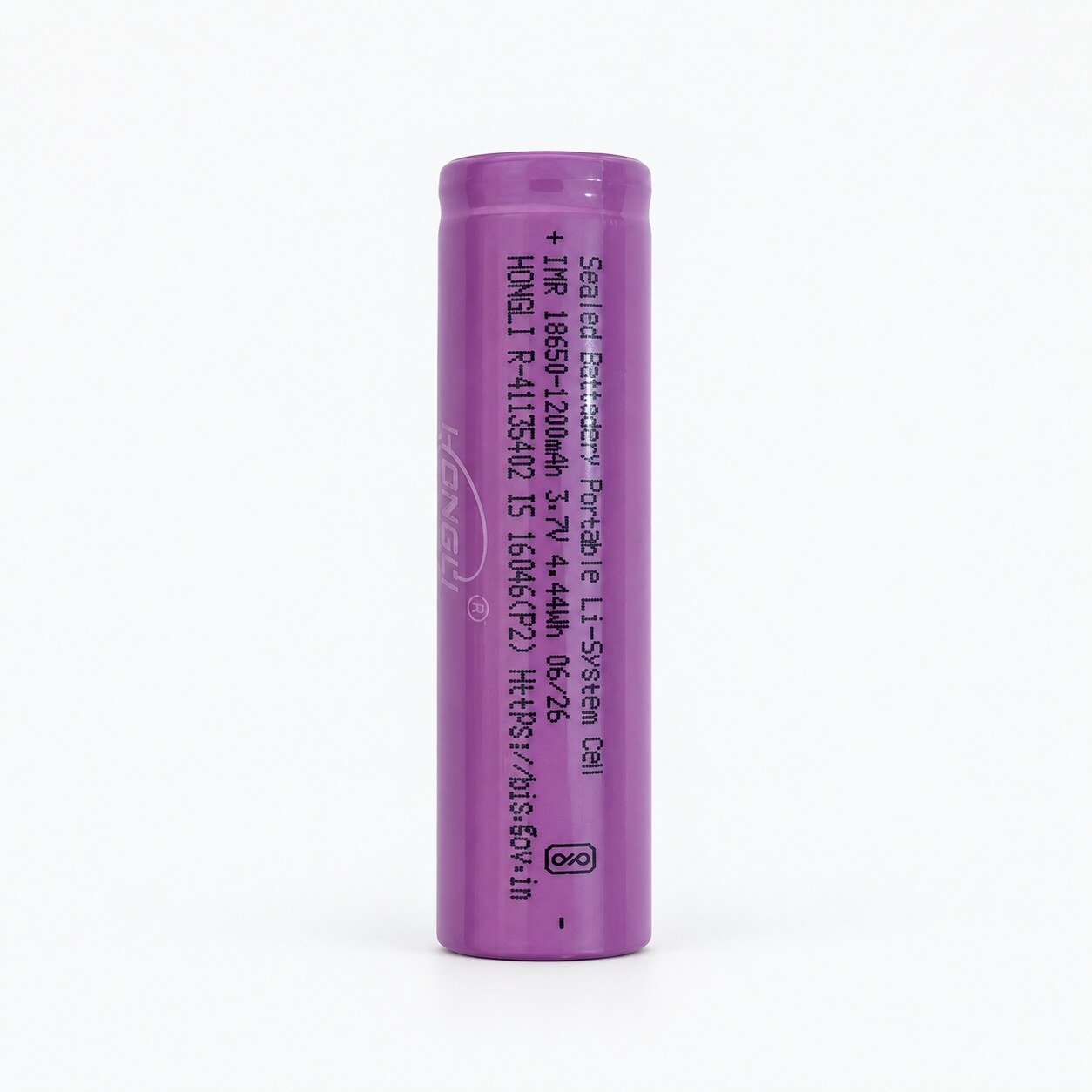
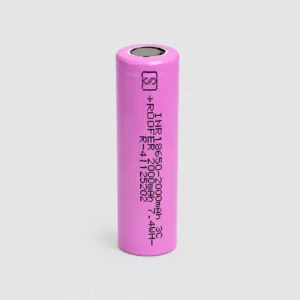
The HONGLI IMR 18650 is a rechargeable cylindrical lithium-ion cell with a nominal voltage of 3.7V and a rated capacity of 1200mAh.
Its rated energy is 4.44Wh:
3.7V × 1.2Ah = 4.44Wh
The cell can be used individually or combined in series and parallel arrangements to manufacture compatible rechargeable battery packs. The number of cells connected in series determines the pack voltage, while the number connected in parallel determines the capacity and current capability.
This is a loose rechargeable cell intended for battery-pack assembly. A compatible charger, BMS, insulation, electrical connections and protective enclosure must be selected separately.
2. Technical Specifications
| Specification |
Details |
| Brand |
HONGLI |
| Product type |
Rechargeable cylindrical lithium-ion cell |
| Cell format |
18650 |
| Cell designation |
IMR 18650 |
| Nominal voltage |
3.7V |
| Rated capacity |
1200mAh |
| Rated energy |
4.44Wh |
| Maximum charging voltage |
Typically 4.2V; verify datasheet |
| Recommended charging current |
Not specified |
| Maximum charging current |
Not specified |
| Continuous discharge current |
Not specified |
| Maximum pulse current |
Not specified |
| Minimum discharge voltage |
Not specified |
| Internal resistance |
Not specified |
| Protection circuit |
Not visible |
| Cell balancing |
Requires an external BMS in multi-cell packs |
| BIS registration marking |
R-41135402 |
| Indian standard marking |
IS 16046 (Part 2) |
| Date marking |
06/26 |
| Approximate dimensions |
18mm diameter × 65mm length |
| Terminal type |
Verify before ordering |
| Wrapper colour |
Purple |
Any charging, discharging, temperature, cycle-life or current value not printed on the cell should be confirmed from the manufacturer’s datasheet before use.
3. Capacity and Energy
The cell is marked with:
- Rated capacity: 1200mAh or 1.2Ah
- Nominal voltage: 3.7V
- Rated energy: 4.44Wh
The actual usable capacity may vary depending on:
- Discharge current
- Cut-off voltage
- Charging method
- Operating temperature
- Cell age and condition
- Storage history
- Internal resistance
- Battery-pack construction
Capacity and internal-resistance testing are recommended before assembling multiple cells into a battery pack.
4. Example Battery-Pack Configurations
| Configuration |
Nominal voltage |
Maximum charging voltage |
Approximate capacity |
| 1S1P |
3.7V |
4.2V |
1200mAh |
| 2S1P |
7.4V |
8.4V |
1200mAh |
| 3S1P |
11.1V |
12.6V |
1200mAh |
| 4S1P |
14.8V |
16.8V |
1200mAh |
| 1S2P |
3.7V |
4.2V |
2400mAh |
| 2S2P |
7.4V |
8.4V |
2400mAh |
| 3S2P |
11.1V |
12.6V |
2400mAh |
| 4S2P |
14.8V |
16.8V |
2400mAh |
These are theoretical values. Actual battery-pack capacity and usable energy depend on cell matching, discharge rate, temperature, BMS settings and pack construction.
5. Suitable Applications
This cell may be suitable for compatible low- or moderate-current applications such as:
- Rechargeable LED lights
- Emergency lights
- Small Bluetooth speakers
- Portable electronic equipment
- Battery-powered instruments
- Small backup-power devices
- DIY electronics projects
- Educational projects
- Prototype battery packs
- Battery repair and replacement work
- Low-power rechargeable equipment
Do not use this cell in power tools, high-performance electric vehicles, high-current motors or other demanding equipment unless the cell’s continuous and peak discharge-current ratings have been verified.
6. Charger and BMS Compatibility
Use this cell only with chargers and protection circuits designed for 3.6V or 3.7V nominal lithium-ion cells.
For single-cell use:
- Use a proper lithium-ion CC/CV charger.
- The typical maximum charging voltage is 4.2V.
- Do not use a charger designed only for LiFePO₄ cells.
- Do not use an uncontrolled power supply.
- Add a suitable protection circuit if the cell is unprotected.
For multi-cell battery packs:
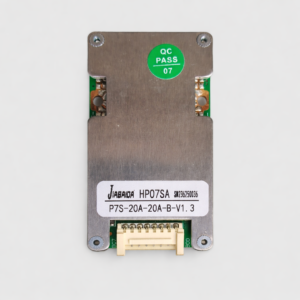
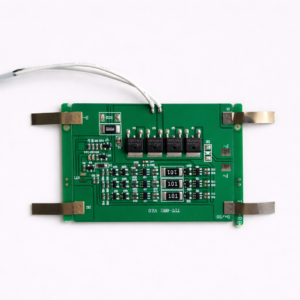
- Use a BMS matching the exact number of series groups.
- Use a lithium-ion charger matching the pack’s charging voltage.
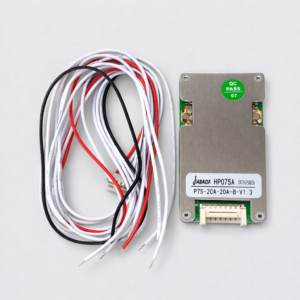
- Select the BMS current rating according to the verified cell current.
- Connect the sensing wires in the correct sequence.
- Use closely matched cells of the same model, capacity, age and condition.
7. Battery-Pack Assembly Guidance
- Inspect the cell wrapper and positive-terminal insulation ring.
- Do not use the cell if the wrapper is torn or damaged.
- Check the voltage of every cell before assembly.
- Measure capacity and internal resistance when possible.
- Use cells with closely matched voltage, capacity and internal resistance.
- Maintain the correct polarity throughout the pack.
- Use correctly sized 18650 cell holders or spacers.
- Use suitable nickel strips or properly rated busbars.
- Prefer spot welding instead of soldering directly to the cell.
- Keep the positive terminal and nickel connections properly insulated.
- Install a compatible BMS in multi-cell battery packs.
- Use an appropriately rated fuse where required.
- Secure the cells against movement and vibration.
- Insulate all exposed conductive parts.
- Install the completed pack inside a suitable enclosure or protective sleeve.
8. Important Current-Rating Note
The cell’s continuous-discharge and maximum-current ratings are not visible in the supplied image.
Do not estimate the safe current from the 18650 size, IMR marking or 1200mAh capacity alone. Different 18650 cells can have substantially different current capabilities.
Until an authentic manufacturer datasheet is available, this cell should not be advertised or used as a high-drain cell.
The safe current of a complete battery pack is determined by its lowest-rated component, including:
- Battery cells
- BMS
- Nickel strips or busbars
- Output cables
- Connectors
- Fuse
- Charger
- Connected load
9. Safety Information
- Use only a compatible lithium-ion charger.
- Do not charge above the manufacturer’s specified voltage.
- Never reverse the cell polarity.
- Never short-circuit the positive and negative terminals.
- Do not puncture, crush, bend or dismantle the cell.
- Do not expose the cell to fire, excessive heat or direct sunlight.
- Do not use a cell with damaged insulation.
- Do not combine cells of different models, capacities, ages or conditions.
- Do not use swollen, leaking, corroded or unusually hot cells.
- Stop charging or discharging if the cell becomes excessively hot.
- Store loose cells in a dry, non-conductive container.
- Keep cells away from loose metal objects and children.
- Battery-pack assembly should be performed by someone familiar with lithium-ion battery safety.