
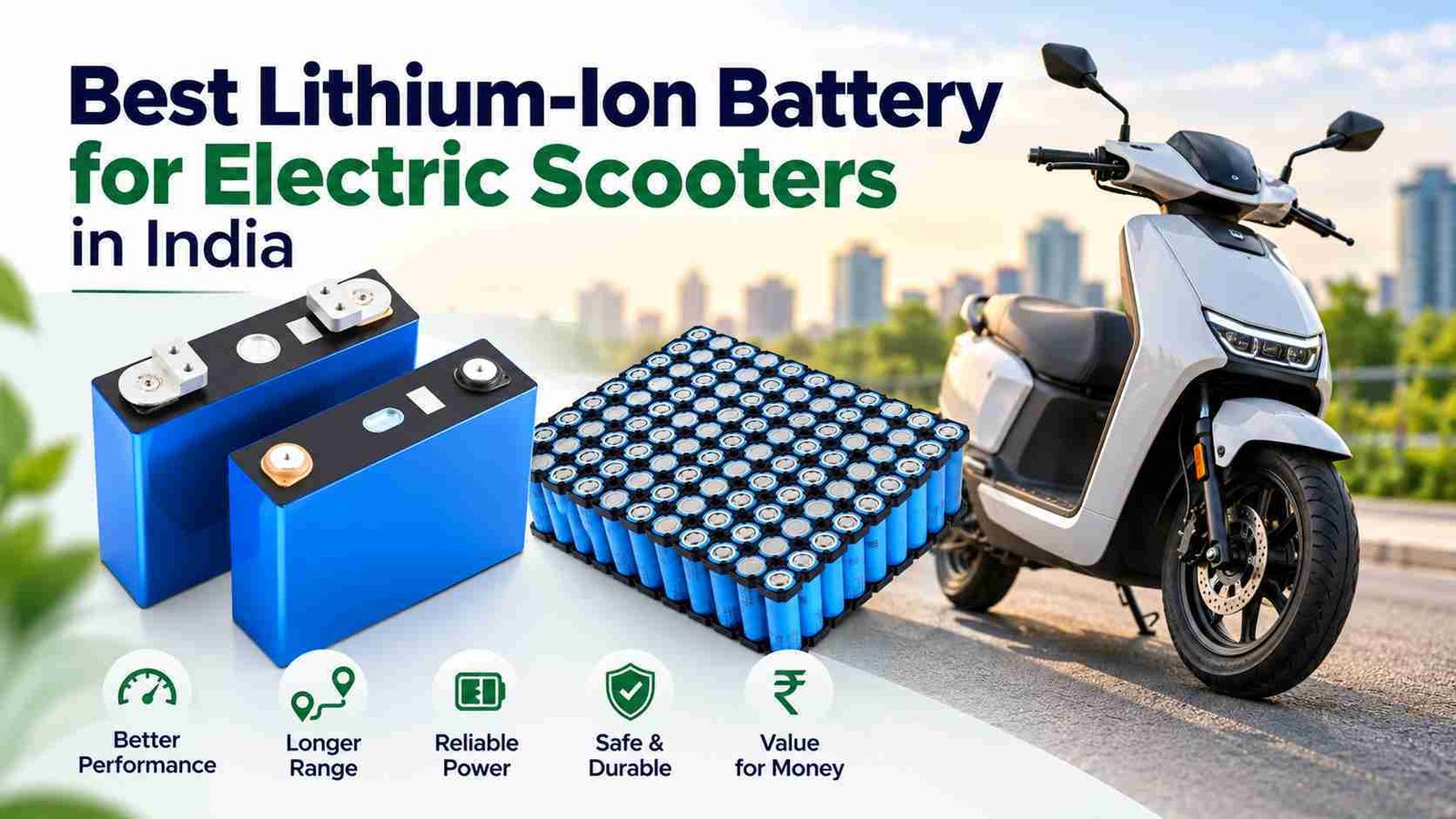
Planning to buy a new lithium-ion battery for your electric scooter? Or is your existing EV scooter battery no longer giving you the mileage it used to?
Choosing the right battery can be confusing. There are 48V, 60V and 72V batteries, different capacities such as 20Ah, 30Ah and 40Ah, and battery technologies like NMC and LiFePO4 (LFP). With so many choices available, it’s natural to wonder which electric scooter battery offers the best value for money.
The right choice comes down to your scooter’s specifications, how far you ride each day, and how much you’re comfortable spending.
A good electric scooter lithium-ion battery should deliver reliable performance, sufficient riding range, a long service life and dependable safety protection. More importantly, it must be compatible with your vehicle.
In this buying guide, we’ll explain everything you need to know about choosing the best lithium-ion battery for electric scooters in India, without complicated technical language.
1. Why choose a lithium-ion battery for your electric scooter?
If you’re replacing an old lead-acid battery or purchasing a battery for a new electric two-wheeler, lithium-ion technology is worth considering.
Lithium-ion batteries have become popular in electric vehicles because they can store more energy in a smaller, lighter package than traditional lead-acid batteries.
Here are some of their main benefits:
- Lighter weight: A lithium-ion battery pack is generally lighter than an equivalent lead-acid battery system, making the scooter easier to handle.
- Longer lifespan: Quality lithium batteries can deliver more charging cycles than conventional lead-acid batteries.
- Faster charging capability: Many lithium-ion packs support higher charging rates, provided the cells, BMS and charger are designed for them.
- Better usable capacity: Lithium batteries generally provide more usable energy without the same degree of voltage drop experienced by lead-acid batteries.
- Low maintenance: Unlike flooded lead-acid batteries, lithium-ion batteries do not require water topping.
Although the initial lithium-ion electric scooter battery price may be higher, the longer service life and lower weight can make it a worthwhile investment.
2. Which lithium-ion battery is best for electric scooters?
There is no single battery that’s best for every electric scooter.
For most buyers, the first step is to identify the correct battery voltage and capacity recommended for their vehicle.
Choose a battery based on your requirements
| Your requirement | What to look for |
| Daily city commuting | Correct-voltage lithium pack with sufficient Ah capacity |
| Long-distance travel | Higher usable battery energy in Wh or kWh |
| Lightweight battery | High-quality NMC lithium-ion battery |
| Long cycle life | LFP battery, where the scooter supports it |
| Existing battery replacement | Match voltage, chemistry, BMS, connectors and communication |
| High-power scooter | Battery with adequate continuous and peak discharge current |
For example, a 60V 40Ah lithium battery for EV stores more energy than a 60V 20Ah battery. However, that doesn’t automatically mean you should install the larger battery. It must fit in the battery compartment, support the required current and work with your scooter’s charging system.
Buying tip: Always confirm your existing battery specifications before purchasing a replacement EV battery.
3. Understanding 48V, 60V and 72V electric scooter batteries
Battery voltage is one of the most important specifications when selecting a lithium-ion battery for an EV scooter.
Different electric scooters are designed to work with different battery voltage ranges.
48V Lithium-Ion Battery for Electric Scooter
A 48V-class lithium battery can be suitable for electric scooters and other light electric vehicles designed around this voltage range.
Common capacity options include 20Ah, 24Ah and 30Ah, depending on the vehicle and supplier.
60V Lithium-Ion Battery for Electric Scooter
A 60V-class lithium battery is used in many electric two-wheelers, including selected city commuter scooters.
Popular configurations include 60V 30Ah, 60V 32Ah and 60V 40Ah. A higher Ah rating generally means more stored energy when the voltage is the same.
72V Lithium-Ion Battery for Electric Scooter
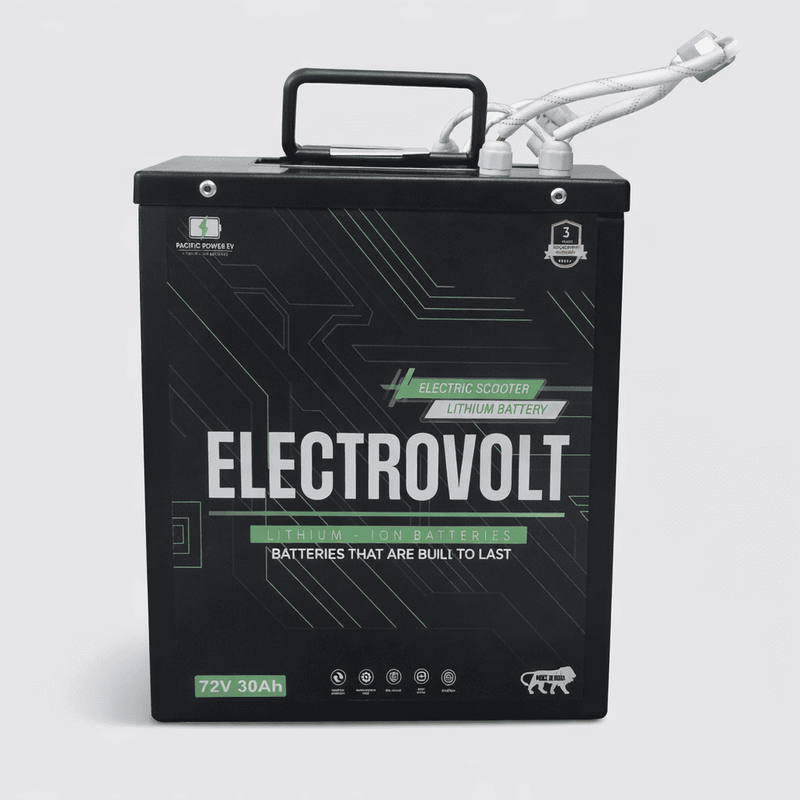
A 72V-class battery is used in electric scooters and motorcycles designed for higher-voltage operation.
Common configurations include 72V 30Ah and 72V 40Ah. These batteries can support higher-powered applications when correctly matched with the motor controller and BMS.
Remember, a 48V, 60V or 72V label describes a battery’s voltage class. Its exact nominal voltage and full-charge voltage depend on the cell chemistry and series configuration.
Can you replace a 60V scooter battery with a 72V battery?
Not unless the vehicle manufacturer confirms that its controller, motor system, charger and electrical components support the higher voltage. Installing an incompatible battery can damage the scooter or create a safety hazard.
4. How much battery capacity do you need for your electric scooter?
Battery capacity is usually measured in ampere-hours (Ah).
Simply put, a higher Ah rating means the battery can store more energy when compared at the same voltage.
But to compare electric scooter batteries properly, it’s better to look at watt-hours (Wh).
The formula is:
Battery energy (Wh) = Nominal battery voltage (V) × Capacity (Ah)
Here are some examples using simplified nominal voltage classes:
| EV battery variant | Approx. energy | Indicative range* |
| 48V 20Ah | 960 Wh | 24–38 km |
| 48V 30Ah | 1,440 Wh | 36–58 km |
| 60V 30Ah | 1,800 Wh | 45–72 km |
| 60V 40Ah | 2,400 Wh | 60–96 km |
| 72V 30Ah | 2,160 Wh | 54–86 km |
| 72V 40Ah | 2,880 Wh | 72–115 km |
*Illustrative range estimates based on assumed energy consumption of 25–40 Wh/km and simplified battery energy calculations. Actual range depends on usable capacity, scooter efficiency, rider weight, speed, terrain, temperature and battery condition. These are not guaranteed product ranges.
For example, if you travel 40–50 km daily, your scooter may need roughly 1.25–2.0 kWh of usable battery energy, depending on its efficiency. It’s also wise to keep some additional range for unexpected journeys and battery ageing.
When comparing EV scooter lithium battery prices, calculate the price against battery energy in kWh rather than Ah alone.
5. NMC vs LFP: Which lithium battery technology should you buy?
When shopping for a lithium-ion battery for an electric scooter in India, you may come across two popular technologies: NMC and LFP.
Both belong to the lithium-ion battery family, but they have different advantages.
NMC Battery
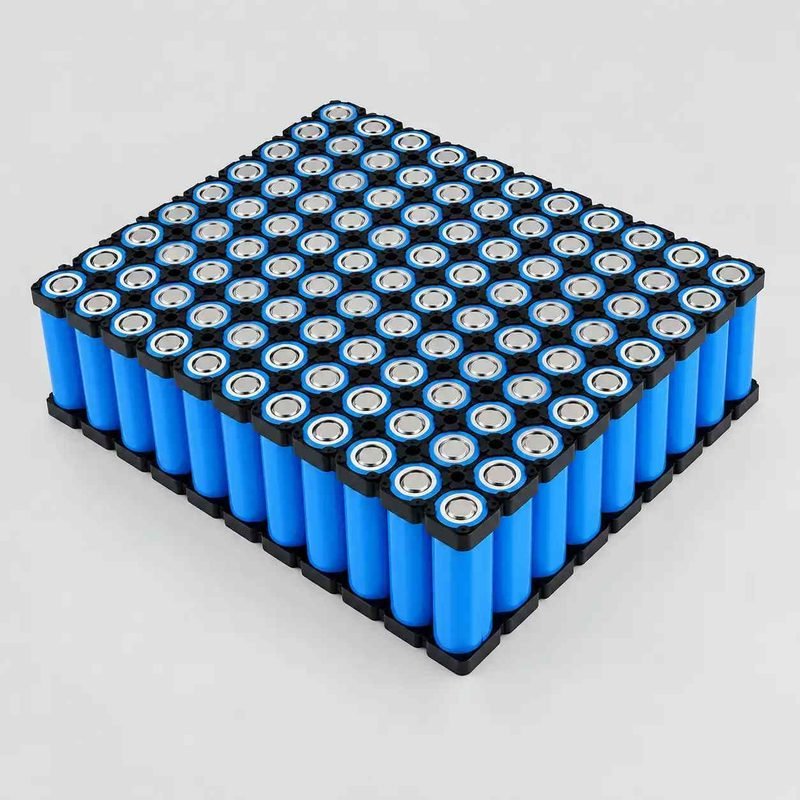
Nickel Manganese Cobalt
LFP Battery
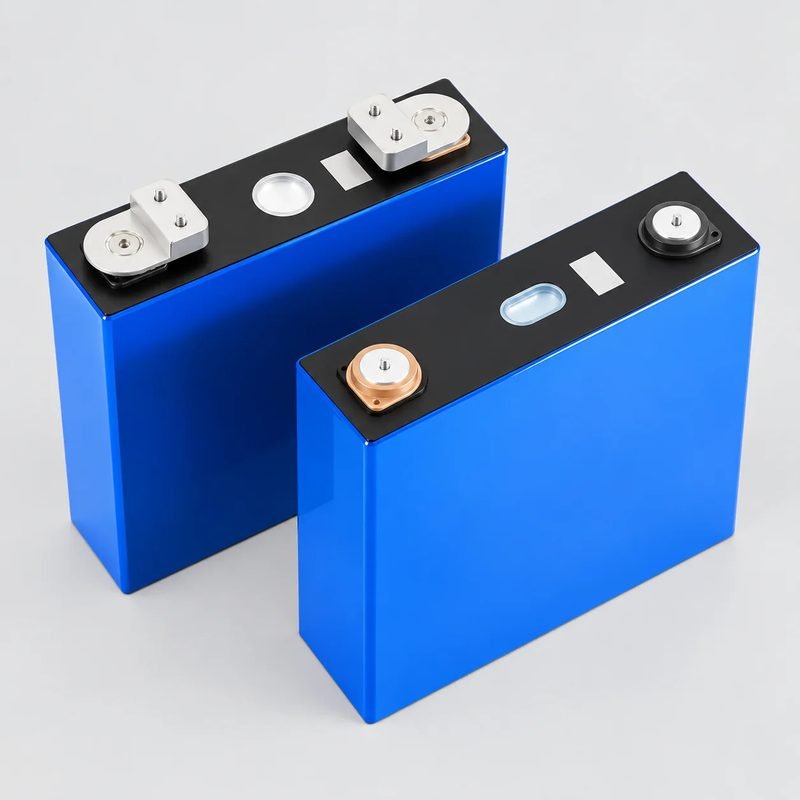
Lithium Iron Phosphate
| Feature | NMC lithium-ion | LFP / LiFePO4 |
| Energy density | Generally higher | Generally lower |
| Weight for same energy | Usually lighter | Usually heavier |
| Battery life | Good | Typically longer cycle life |
| Thermal stability | Requires careful thermal management | Generally more thermally stable |
| Space requirement | Usually more compact | Usually larger |
| Best suited for | Compact, lightweight battery packs | Long-life applications with adequate space |
NMC batteries are a useful choice when space and weight matter. LFP batteries are worth considering when long cycle life and thermal stability are priorities. Both need proper protective electronics and safe charging systems.
BikeWale
+1
Which one should you buy?
For a scooter originally designed for an NMC battery, a compatible NMC replacement is often the most straightforward option. An LFP conversion should only be considered after confirming the required changes to charging voltage, battery dimensions, BMS and controller compatibility.
Do not assume that an LFP battery is directly interchangeable with an NMC battery just because both are advertised as 60V or 72V.
6. Electric scooter lithium-ion battery price in India
Price is naturally one of the biggest considerations when purchasing a replacement electric scooter battery.
The cost depends on battery voltage, Ah capacity, cell quality, BMS specifications, enclosure, warranty and supplier.
To give you a practical idea, here are examples from the PowerKart.in electric scooter battery category.
Electric scooter battery options at PowerKart.in
Observed listed prices during research; subject to change.
| Battery model | Listed price |
| 60V 32Ah NMC Battery | ₹26,990 |
| 60V 40Ah NMC Battery | ₹33,634 |
| 72V 30Ah NMC Battery | ₹29,249 |
| 72V 40Ah NMC Battery | ₹36,000 |
Prices are sourced from PowerKart.in product listings. Confirm current availability, taxes, warranty terms and specifications before ordering.
A low-cost lithium battery may look attractive initially, but the real value depends on the components used inside.
When comparing lithium-ion battery prices for electric scooters, check the following:
- Whether the battery uses new, genuine cells
- The actual battery capacity and usable energy
- Continuous and peak discharge ratings
- BMS protection features
- Charger compatibility
- Warranty terms and after-sales support
A quality EV battery should be judged by its performance, reliability and long-term ownership cost, not just its purchase price.
7. Seven things to check before buying an electric scooter battery
The battery you choose should be fully compatible with your electric scooter and deliver reliable performance right from the moment it’s installed.
Before placing an order, use this checklist.
EV battery buying checklist
0 of 7 checked
Correct battery voltage and chemistry
Sufficient Ah capacity and usable energy
Compatible continuous and peak discharge current
Suitable BMS with safety protections
Correct charger voltage and charging connector
Matching battery dimensions, mounting and communication interface
Clear written warranty and after-sales support
Copy checklist
One particularly important component is the Battery Management System (BMS).
The BMS monitors the battery and provides protection against operating conditions such as overcharging, over-discharging, overcurrent and short circuits, depending on its design.
For higher-power scooters, the BMS and cells must be capable of safely supplying the current needed during acceleration and climbing slopes.
Also remember that some modern electric scooters use battery communication protocols such as CAN or RS485.Even when a replacement battery has the same voltage as your original battery, it may not function properly if it cannot communicate with your scooter’s electronic system.
8. What Is the Expected Lifespan of a Lithium-Ion Electric Scooter Battery?
A high-quality lithium-ion battery can keep your electric scooter running reliably for years. However, how long it actually lasts is influenced by several factors, including the type of battery cells used, their overall quality, charging frequency, surrounding temperature, and your everyday riding habits.
Battery life is often measured in charging cycles.
One full cycle represents the equivalent of using 100% of the battery’s capacity, whether that happens in one discharge or several smaller discharges.
NMC and LFP batteries have different expected cycle lives, and even batteries using the same chemistry can perform differently depending on their cell specifications.
To help your electric scooter battery last longer:
- Use the charger recommended for your battery.
- Avoid leaving the scooter parked in direct sunlight for extended periods.
- Don’t routinely discharge the battery completely.
- Avoid storing it fully discharged.
- Keep your battery safe from moisture, water exposure, accidental impacts, and other forms of physical damage.
- Follow the manufacturer’s charging and storage instructions.
If your scooter suddenly delivers much less range, cuts off unexpectedly, takes unusually long to charge or shows abnormal battery heating, have the battery inspected by a qualified technician.
9. When should you replace your electric scooter battery?
Not every charging or mileage problem means the battery needs replacement.
Sometimes the issue is caused by a faulty charger, loose connection, damaged connector or BMS fault.
However, a battery replacement may be necessary when:
- Your scooter’s range has reduced significantly.
- The battery shuts down under normal acceleration.
- Charging stops unexpectedly despite a working charger.
- The battery can no longer supply the required motor current.
- Diagnostic testing shows weak or damaged cells.
A technician should inspect the battery and charging system before recommending replacement.
If you decide to upgrade from a lead-acid battery to a lithium-ion battery, remember that the conversion may also require changes to the charger, wiring, battery mounting and electrical protection.
Never install a higher-voltage or different-chemistry battery without verifying the vehicle’s compatibility.
10. Where to buy lithium-ion batteries for electric scooters in India?
When purchasing an EV battery online, choosing a knowledgeable battery supplier matters as much as choosing the right specifications.
A reliable supplier should be able to explain which battery works with your scooter, why it’s suitable and what warranty and support you can expect.
At PowerKart.in, customers can explore lithium-ion battery options for electric scooters, including selected 60V and 72V NMC battery packs.
Whether you’re looking for a 60V electric scooter battery, a 72V lithium-ion battery, or a compatible replacement for your existing EV scooter, start by checking your vehicle’s original battery details.
Find the Right Battery for Your Electric Scooter
Choosing between 60V 32Ah, 60V 40Ah, 72V 30Ah and 72V 40Ah? Explore available battery packs and compare the specifications before ordering.
Shop Lithium-Ion Scooter Batteries
11. Frequently asked questions
Q1. Which is the best lithium-ion battery for an electric scooter in India?
The best battery is one that matches your scooter’s specified voltage, current requirements, physical dimensions, charging system and communication interface. NMC is often preferred when compact size and low weight are priorities, while LFP can be attractive for longer cycle life.
Q2. Is a 60V 40Ah battery better than a 60V 30Ah battery?
A 60V 40Ah battery stores approximately 33% more energy than a 60V 30Ah battery at the same nominal voltage. It may provide longer range, provided both batteries have comparable usable capacity and your scooter is compatible.
Q3. Can I use a 72V lithium-ion battery in a 60V electric scooter?
Generally, no. A 72V battery should only be installed if the scooter’s complete electrical system is specifically designed or approved to operate at that voltage.
Q4. Which EV battery has a longer lifespan: NMC or LFP?
LFP batteries typically offer a longer cycle life than NMC batteries under comparable conditions. However, actual battery lifespan depends on cell quality, operating temperature, charging practices and pack construction.
Q5. How much does an electric scooter lithium-ion battery cost in India?
Prices vary substantially depending on voltage, capacity, chemistry and manufacturerFor instance, PowerKart.in offers selected NMC lithium-ion batteries for electric scooters, with prices ranging approximately from ₹27,000 to ₹36,000, based on the product listings reviewed. These prices are examples rather than a market-wide price range.
Q6. Can I replace my scooter’s lead-acid battery with a lithium-ion battery?
Yes, certain scooters can be converted, but only after checking the controller voltage range, charger compatibility, BMS requirements, wiring and physical fitment. A direct replacement without these checks is not recommended.
Q7. Does a higher Ah electric scooter battery increase mileage?
Usually, a higher Ah battery provides more stored energy when voltage and chemistry are comparable. But the actual range increase depends on scooter efficiency, usable battery capacity, rider weight and riding conditions.
Q8. Can I buy a lithium-ion electric scooter battery online?
Yes. You can explore electric scooter lithium-ion batteries on PowerKart.in, compare available specifications and confirm compatibility before purchasing.
Final verdict: Which EV scooter battery should you buy?
If you’re shopping for the best lithium-ion battery for an electric scooter in India, don’t select a battery based on price or capacity alone.
A 60V 40Ah battery may be a suitable upgrade for a compatible 60V scooter that needs more range. A 72V 30Ah or 72V 40Ah battery may be appropriate for vehicles designed around that voltage class. NMC batteries offer the advantage of compact energy storage, while LFP batteries are worth considering for long cycle life and thermal stability.
The right EV scooter battery is the one that offers the best balance of compatibility, usable range, cell quality, safety, warranty and price for your particular vehicle.
Explore the available lithium-ion batteries for electric scooters at PowerKart.in and choose your next battery with confidence.