
Hybrid vs Normal Solar Inverter: Which One Is Better for Your Home?
As more Indian homeowners switch to solar energy, one question continues to come up:
Should I choose a hybrid solar inverter or a normal solar inverter?
At first glance, both systems seem similar. They convert electricity generated by solar panels into usable power for your home. However, the way they handle energy storage, power outages, and electricity management is very different.
Choosing the wrong type of inverter can result in unnecessary expenses or leave you without backup power when you need it most, which is why understanding the factors involved in choosing the best solar power inverter for home use in India is equally important.
In this guide, we’ll compare hybrid and normal solar inverters in simple terms, explain their advantages and limitations, and help you determine which option best suits your home’s energy needs.
Why the Inverter Matters More Than Most Homeowners Realize
Solar panels may be the most visible part of a solar installation, but the inverter is what keeps the entire system functioning efficiently. However, the inverter is equally important.
Solar panels generate electricity, but the inverter controls how that electricity is used, stored, and distributed throughout your home.
A modern solar inverter manages:
- Solar energy conversion
- Power flow to appliances
- Grid interaction
- Battery charging and discharging
- System protection and monitoring
The type of inverter you choose directly affects your electricity savings, backup capability, and overall user experience.
What Is a Normal Solar Inverter?
A normal solar inverter, often called an on-grid or grid-tied inverter, works alongside the utility grid.
During daylight hours, solar panels generate electricity and the inverter converts it into usable AC power for household appliances.
If your solar system generates more electricity than your home consumes, the excess power is usually exported to the grid through net metering.
At night, when solar production stops, electricity is drawn from the utility grid.
How a Normal Solar Inverter Works
- Solar panels generate electricity.
- The inverter converts DC power into AC power.
- Your home consumes solar energy first.
- When solar production exceeds your home’s immediate electricity needs, the surplus energy is automatically fed back into the utility grid.
- During nighttime, electricity comes from the grid.
This setup is simple, efficient, and cost-effective.
What Is a Hybrid Solar Inverter?
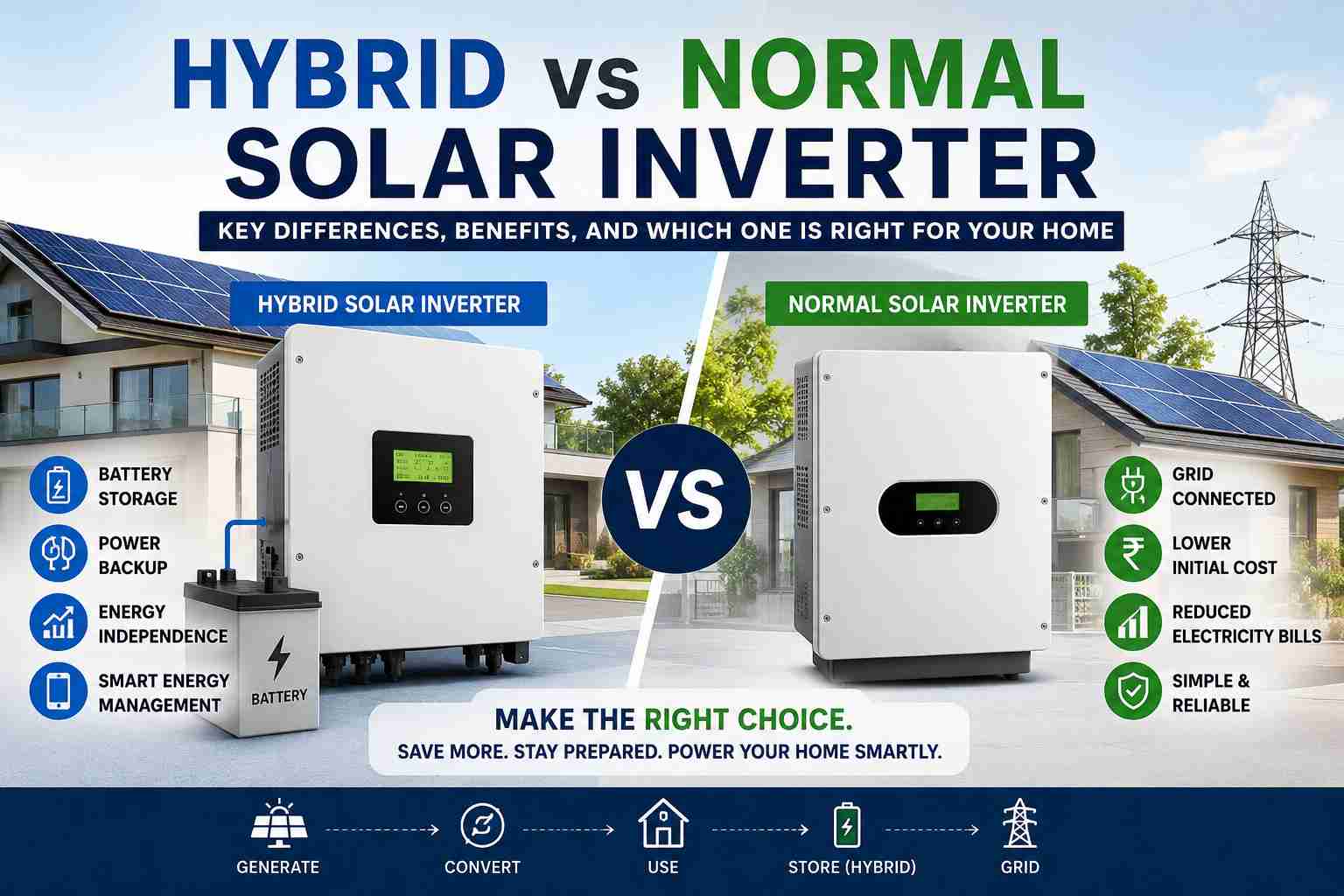
A hybrid solar inverter combines the functionality of a solar inverter and a battery inverter in a single system.
In addition to managing solar energy and grid power, it can also store excess electricity in batteries for later use.
Think of a hybrid inverter as an intelligent energy manager that decides where electricity should go at any given moment.
It can:
- Power your home using solar energy
- Charge batteries with excess solar power
- Export surplus electricity to the grid
- Supply battery power during outages
- Automatically draw power from the utility grid whenever solar generation or stored battery energy is insufficient.
This flexibility is what makes a hybrid solar inverter for home increasingly popular among homeowners seeking greater energy independence.
The Biggest Difference: Energy Storage
The most important difference between these two inverter types is battery support.
A normal solar inverter cannot store electricity.
When your home does not consume all the power produced by the solar panels, the surplus energy is sent to the grid.
A hybrid inverter, on the other hand, can store excess solar energy in batteries.
This stored energy can later be used:
- During power outages
- After sunset
- During periods of high electricity demand
For homeowners considering a solar power inverter for home with battery, hybrid technology offers a significant advantage.
Hybrid vs Normal Solar Inverter: Side-by-Side Comparison
| Feature | Hybrid Solar Inverter | Normal Solar Inverter |
| Battery Support | Yes | No |
| Power Backup | Yes | No |
| Energy Storage | Yes | No |
| Initial Investment | Higher | Lower |
| Grid Dependence | Lower | Higher |
| Future Battery Expansion | Easy | Limited |
| Power During Outages | Available | Not Available |
| Energy Management | Advanced | Basic |
Power Outages: Which Inverter Performs Better?
This is where the difference becomes most noticeable.
Normal Solar Inverter
Most grid-tied systems automatically shut down when the utility grid fails.
This safety mechanism protects utility workers from electrical backfeed.
As a result, even if your solar panels are producing electricity, your home may still lose power during an outage.
Hybrid Solar Inverter
A hybrid inverter can automatically switch to battery power when the grid goes down.
This allows essential appliances to continue operating without interruption.
A solar inverter for home backup can keep important devices running, such as:
- Lights
- Fans
- Wi-Fi routers
- Refrigerators
- Computers
- Security systems
For households that experience frequent power interruptions, the ability to maintain electricity during outages often makes the additional investment worthwhile
Which Option Saves More Money?
The answer depends on how you define savings.
Normal Solar Inverter
A normal inverter generally costs less to purchase and install.
Because there are no batteries involved, the upfront investment remains lower.
If your primary goal is reducing electricity bills, a standard grid-tied system can deliver excellent value.
Hybrid Solar Inverter
Hybrid Solar Inverter systems require a larger initial investment.
However, they allow homeowners to:
- Store excess solar energy
- Reduce grid dependence
- Maintain backup power during outages
Over time, these benefits can improve the overall value of the system, especially in regions with unreliable electricity supply.
Is a Hybrid Inverter Worth the Extra Cost?
Many homeowners ask this question before investing in solar.
Choosing between the two becomes easier once you identify your priorities, whether that’s lower electricity bills, reliable backup power, or greater energy independence.
A hybrid inverter may be worth the additional cost if:
- You frequently experience power outages.
- You work from home.
- You rely on uninterrupted internet connectivity.
- You want battery backup.
- You prefer greater energy independence.
If none of these factors apply to your situation, a normal inverter may provide better value.
Which Inverter Is Better for a 2BHK Home?
For most 2BHK homes, either option can work effectively.
The decision depends less on home size and more on backup requirements.
If your area has reliable electricity and your goal is reducing monthly bills, a normal inverter is often sufficient.
However, homeowners who require uninterrupted power for work, education, or daily activities may benefit more from a hybrid system with battery storage.
How Hybrid and Normal Inverters Compare for 3BHK Homes
A 3BHK home generally consumes more electricity and often includes additional appliances such as air conditioners, water pumps, and home office equipment.
In such cases, hybrid systems become increasingly attractive because they can store excess solar energy and provide backup power during outages.
In areas where the electricity supply is dependable and backup power is rarely needed, a normal solar inverter can offer a more cost-effective solution
What About a 6kW Solar Inverter?
A 6kW solar inverter for home is one of the most common capacities installed in Indian households.
Whether you choose a hybrid or normal inverter, a 6kW system typically provides sufficient capacity for many 2BHK and 3BHK homes.
The more important decision is not the capacity itself but whether you need battery storage and backup functionality.
Approximate Cost Difference
Although prices vary by brand and features, the general difference is straightforward.
Normal Solar Inverter
- Lower upfront investment
- No battery costs
- Simpler installation
Hybrid Solar Inverter
- Higher inverter cost
- Battery storage cost
- More advanced functionality
In most cases, hybrid systems cost significantly more initially but provide additional benefits that standard systems cannot offer.
When Is a Normal Solar Inverter the Better Choice?
A hybrid inverter is usually the better choice if:
- Power outages occur frequently in your area.
- You need reliable backup power.
- You work from home.
- You want to store excess solar energy.
- You want a future-ready solar system that can support battery storage whenever your backup needs increase.
- You want to maximize the use of self-generated solar power while reducing dependence on the electricity grid.
For these homeowners, a hybrid system often delivers better long-term value.
When Is a Normal Solar Inverter the Better Choice?
A normal solar inverter may be the better option if:
- Your grid supply is stable.
- Power cuts are rare.
- Your budget is limited.
- Your primary focus is lowering electricity bills.
- You do not require battery backup.
For many urban households with reliable electricity infrastructure, a normal inverter remains a practical and cost-effective solution.
Final Verdict
Both inverter types serve different purposes, and neither is universally better.
A normal solar inverter is ideal for homeowners seeking affordable solar adoption and maximum savings on electricity bills.
A hybrid solar inverter is designed for homeowners who want backup power, battery storage, and greater energy independence.
The right choice ultimately depends on your power reliability, budget, and long-term energy goals.
If uninterrupted power and battery storage are important to you, a hybrid system is likely the better investment.
If your goal is simply reducing electricity bills at the lowest possible cost, a normal solar inverter may be all you need.
Before making a final decision, evaluate your household’s electricity usage patterns, backup requirements, and future plans. Doing so will help you select the inverter that delivers the greatest value for your home. Homeowners exploring hybrid inverter options can also consult experienced suppliers such as Powerkart, a LuxPower hybrid solar inverter distributor in Bangalore, for guidance on selecting the right system configuration.