1. Product Overview
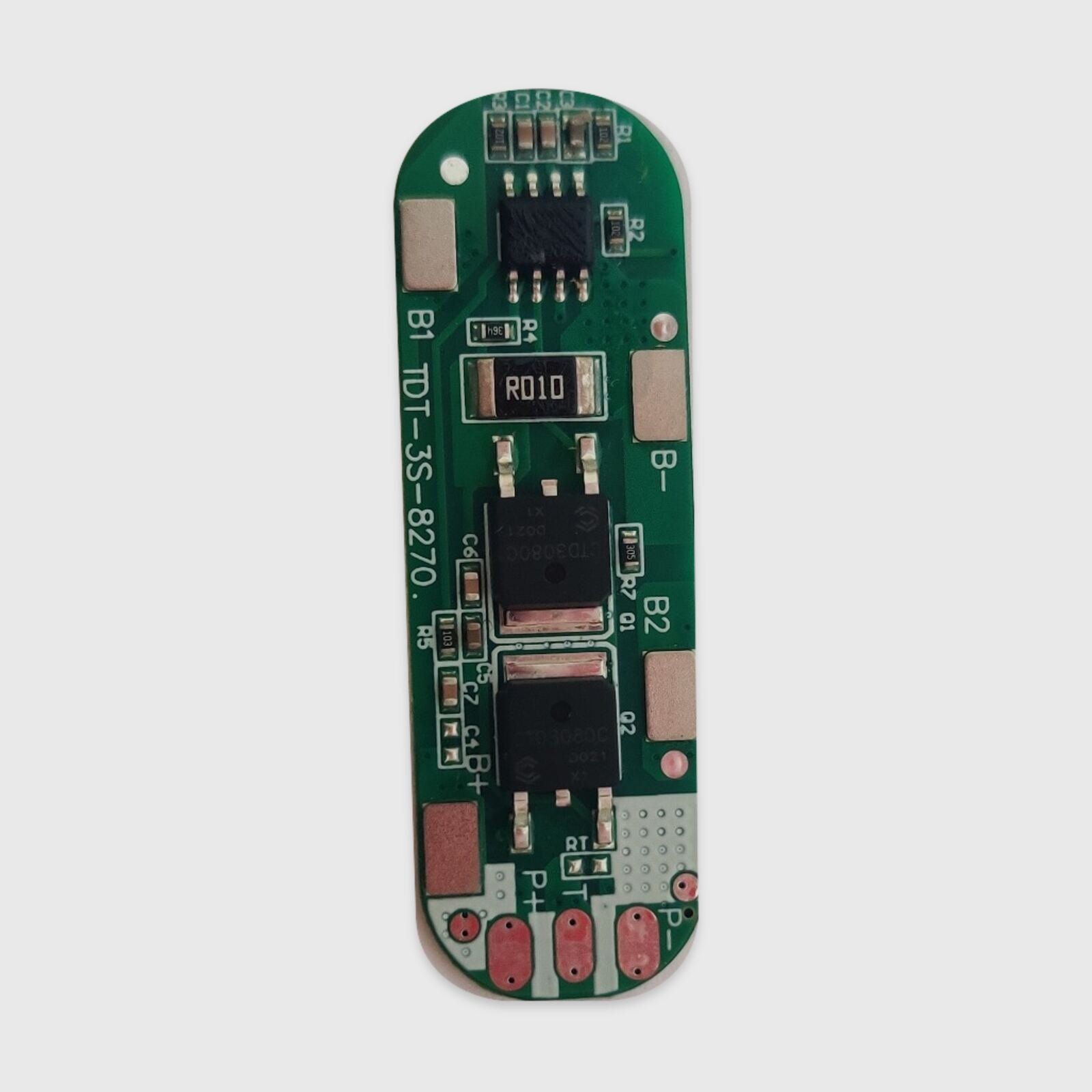
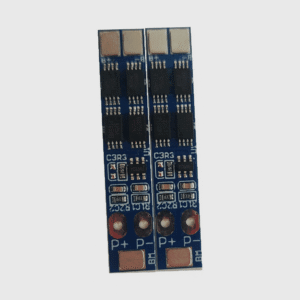
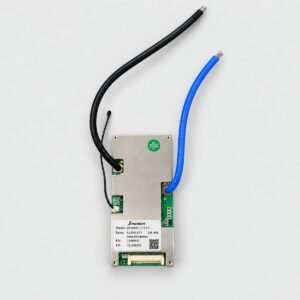
The TDT-3S-8270 is a compact battery-protection BMS board designed for three 3.6V or 3.7V lithium-ion cells or parallel cell groups connected in series.
A completed 3S lithium-ion pack has a nominal voltage of approximately 10.8V–11.1V and reaches 12.6V when fully charged.
The board monitors the three series groups and provides protection against abnormal charging, excessive discharge and short-circuit conditions. Its compact shape makes it suitable for small battery packs and portable electronic equipment.
This model is advertised as a 5A protection board. The available seller specification lists a maximum operating-current range of 5–8A and a maximum instantaneous current of 9–10A.
2. Technical Specifications
| Specification |
Details |
| Brand |
TDT |
| Model |
TDT-3S-8270 |
| Product type |
Lithium-ion battery protection BMS |
| Cell configuration |
3S |
| Compatible cell voltage |
3.6V or 3.7V nominal |
| Nominal pack voltage |
10.8V–11.1V |
| Maximum charging voltage |
12.6V |
| Advertised current rating |
5A |
| Maximum operating current |
5–8A |
| Maximum instantaneous current |
9–10A |
| Overcharge-voltage range |
4.25–4.35V ±0.05V per cell |
| Over-discharge-voltage range |
2.3–3.0V ±0.05V per cell |
| Standby current |
Less than 6µA |
| Internal resistance |
Less than 60mΩ |
| Short-circuit protection |
Yes, with delayed self-recovery |
| Operating temperature |
−40°C to +50°C |
| Storage temperature |
−40°C to +80°C |
| Expected operating life |
More than 30,000 hours |
| Cell balancing |
Not specified |
| Temperature sensor |
Not supplied |
| Communication interface |
Not provided |
3. Visible Connection Points
| PCB marking |
Typical connection |
| B− |
Negative terminal of the first cell group |
| B1 |
Junction between cell groups 1 and 2 |
| B2 |
Junction between cell groups 2 and 3 |
| B+ |
Positive terminal of the third cell group |
| P+ |
External positive connection |
| P− |
External negative connection |
| T |
Auxiliary pad; exact function must be verified |
Always confirm the connection sequence using a multimeter before soldering. Do not rely only on the physical location of the pads.
4. Protection Functions
The TDT-3S-8270 is intended to provide essential protection for compatible 3S lithium-ion battery packs, including:
- Overcharge protection
- Over-discharge protection
- Overcurrent protection
- Short-circuit protection
- Charge and discharge switching through onboard MOSFETs
- Automatic recovery after certain protection events
The exact overcurrent threshold, recovery behaviour and delay times are not specified and should be confirmed before use in a critical application.
5. Suitable Applications
This protection board may be suitable for compatible low-current 3S lithium-ion battery packs used in:
- Rechargeable LED lights
- Portable electronic equipment
- Bluetooth speakers
- Small robotics projects
- DIY electronics
- Battery-powered instruments
- Small backup-power devices
- Toys and hobby equipment
- Custom 11.1V lithium-ion battery packs
- Battery repair and replacement work
The operating and starting current of the connected equipment must remain within the verified capability of the BMS and battery cells.
6. Battery and Charger Compatibility
Use this board only when:
- The pack contains exactly three series-connected lithium-ion groups.
- Each cell has a nominal voltage of 3.6V or 3.7V.
- Each cell has a maximum charging voltage of 4.2V.
- The charger is designed for a 3S lithium-ion pack.
- The charger’s maximum output voltage does not exceed 12.6V.
- The equipment’s operating and peak current remain within the board’s verified limits.
- All three series groups are at closely matched voltages before connection.
Do not use this board with 3S LiFePO4 cells. LiFePO4 cells require different charging and protection-voltage thresholds.
7. Installation Guidance
- Check the voltage of all three cell groups before installation.
- Connect B− to the battery-pack negative terminal.
- Connect B1 to the junction between the first and second series groups.
- Connect B2 to the junction between the second and third series groups.
- Connect B+ to the battery-pack positive terminal.
- Connect the charger and load through the specified P+ and P− terminals.
- Verify every intermediate voltage with a multimeter before applying power.
- Use correctly sized wires for the expected current.
- Keep soldering time short to avoid overheating the PCB and battery cells.
- Insulate the board and every exposed electrical connection.
- Mount the PCB where it cannot contact nickel strips, metal enclosures or other conductive parts.
8. Important Usage Note
The BMS current rating does not increase the current capability of the battery cells.
The complete battery pack must be designed according to the lowest current rating among:
- The BMS
- Battery cells
- Nickel strips or busbars
- Output wires
- Connectors
- Fuse
- Charger
- Connected load
This board is intended for relatively low-current equipment. It should not be used for high-power motors, power tools or other loads with starting currents above the verified BMS limit.
9. Safety Information
- Incorrect B1 or B2 wiring can permanently damage the BMS.
- Never connect the sensing points in the wrong sequence.
- Do not reverse battery polarity.
- Do not short B+, B−, P+ or P−.
- Use only a compatible 12.6V lithium-ion charger.
- Do not exceed the current rating of the board or battery cells.
- Keep the PCB away from water, conductive dust and loose metal objects.
- Do not use a burnt, cracked, corroded or unusually hot board.
- Installation should be performed by a person familiar with lithium-battery wiring and safety.