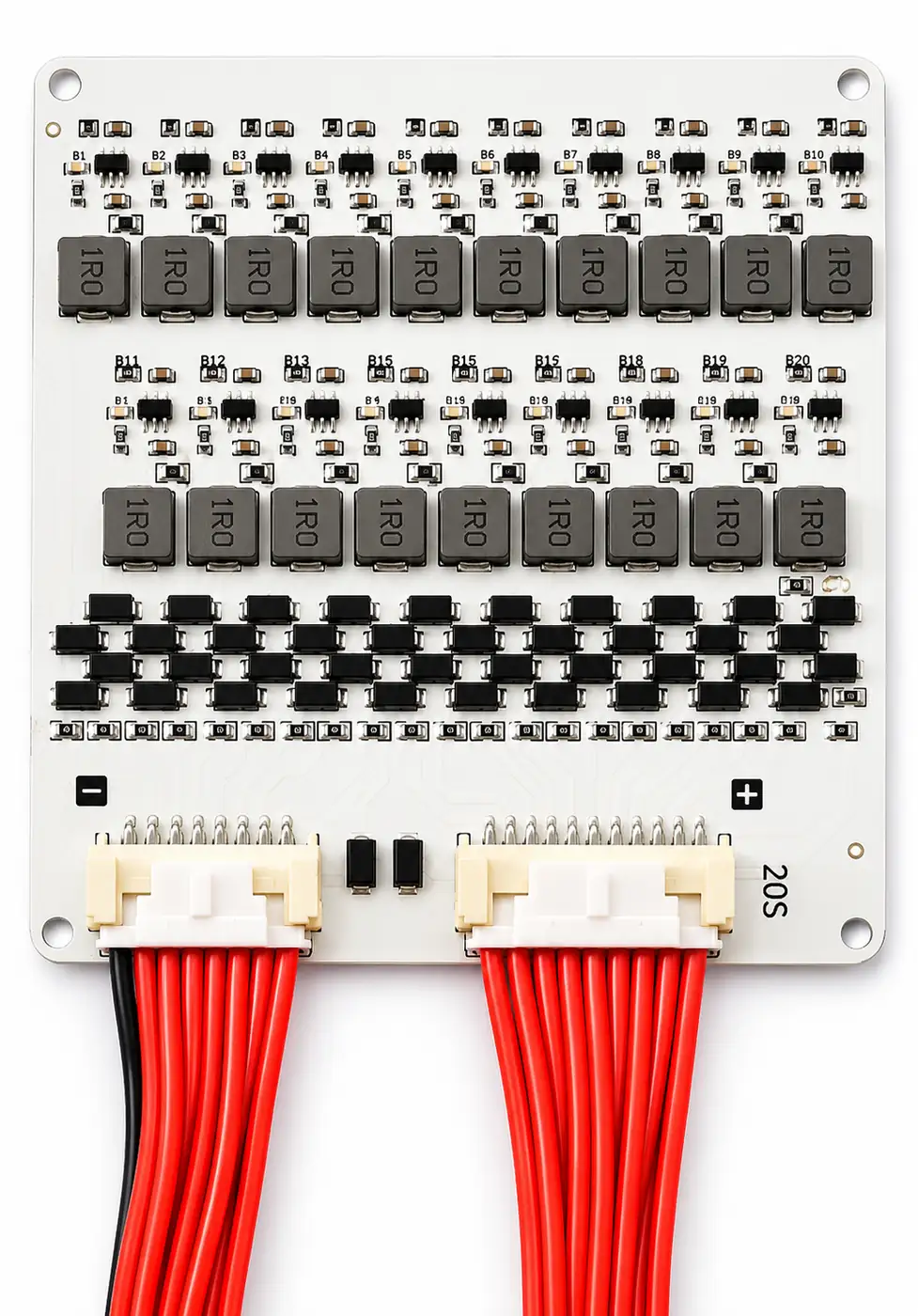
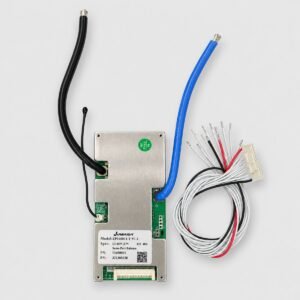
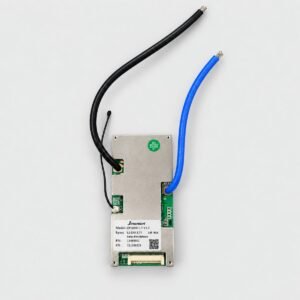
The 20S lithium battery active balancer board is designed to help maintain more consistent voltage between the individual series-connected cell groups inside a battery pack.
During repeated charging and discharging, some cells or parallel groups can gradually become higher or lower in voltage than others.
A battery balancer helps reduce this difference by transferring or redistributing energy between cell groups, depending on the balancer design.
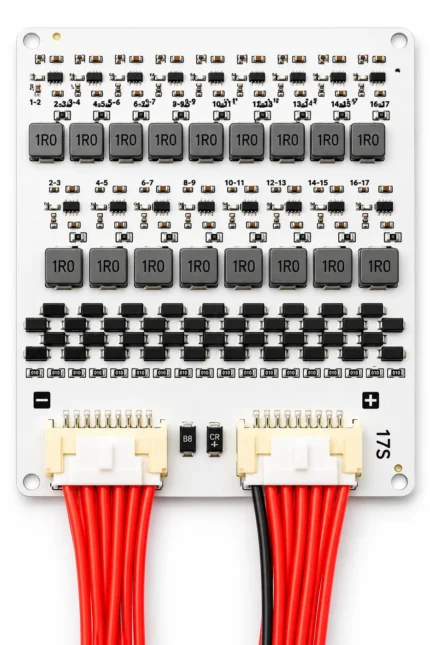
This 20S board includes multiple balancing channels, large inductive components and dedicated balance leads for connection to individual cell groups.
20S Battery Configuration
The PCB is clearly marked:
20S
This means it is intended for a battery pack containing up to 20 series-connected cell groups.
A 20S configuration may be used with different lithium battery chemistries, but the actual pack voltage depends on the chemistry.
For example:
20S NMC / Li-ion
Approximate nominal voltage:
20 × 3.7V = 74V
Maximum voltage at 4.2V per cell:
20 × 4.2V = 84V
20S LiFePO4
Approximate nominal voltage:
20 × 3.2V = 64V
Maximum voltage at 3.65V per cell:
20 × 3.65V = 73V
The balancer must be confirmed as compatible with the selected chemistry and operating cell-voltage range before use.
Active Cell Balancing
The board uses multiple balancing channels with visible inductive components.
Unlike simple passive balancing systems that dissipate excess energy as heat, active balancing systems are generally designed to transfer energy between cells or cell groups.
Potential benefits include:
- Reduced voltage difference between cell groups
- Improved pack consistency
- Better utilisation of available battery capacity
- Reduced imbalance during repeated cycling
- Useful for ageing or large-capacity battery packs
The exact balancing current is not visible on the product, so it should be confirmed from the supplier specification before ordering.
Cell Voltage Balancing
In a 20S battery pack, the balancer connects across individual cell groups.
The balance wiring allows the board to monitor and interact with each series group separately.
The objective is to reduce differences between the highest-voltage and lowest-voltage groups.
This can be particularly useful in:
- High-capacity lithium batteries
- Older battery packs
- Rebuilt battery packs
- EV battery packs
- Solar storage batteries
- Batteries experiencing increasing cell imbalance
Wiring Harness
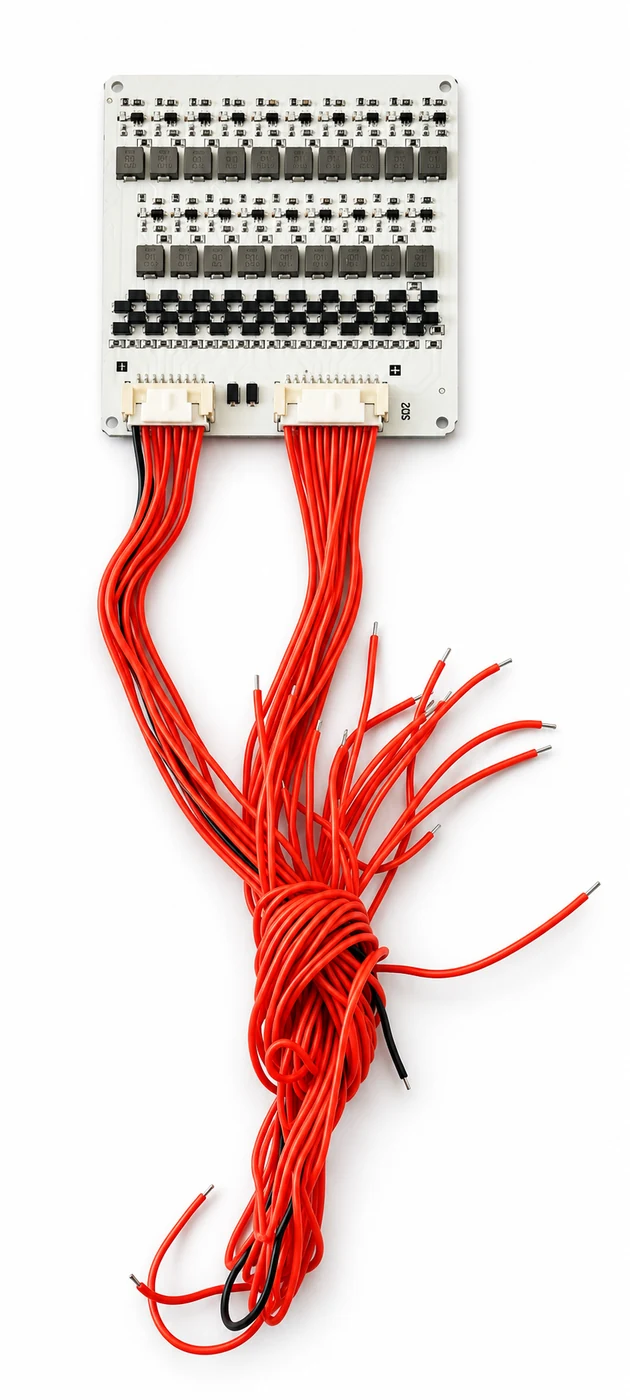
The board is supplied with two multi-pin connectors and multiple individual balance wires.
These wires are used to connect the balancer to the individual battery cell groups.
Important
The balance leads must be connected in the correct voltage sequence.
Incorrect wiring can damage:
- The balancer board
- Battery cells
- Balance wiring
- Other battery electronics
Always measure each connection point with a multimeter before plugging the harness into the board.
Balancer vs BMS
An active balancer and a Battery Management System perform different functions.
Active Balancer
Primarily helps reduce voltage differences between individual cell groups.
BMS
Typically provides protection functions such as:
- Cell over-voltage protection
- Cell under-voltage protection
- Over-current protection
- Short-circuit protection
- Temperature protection
Important
This 20S active balancer should not automatically be considered a replacement for a BMS.
A suitable BMS should normally still be used where battery protection is required.
Suitable Applications
This 20S battery balancer may be suitable for compatible:
- Electric scooter batteries
- Electric motorcycle batteries
- EV battery packs
- Solar battery systems
- LiFePO4 battery packs
- NMC lithium battery packs
- Home inverter batteries
- UPS lithium batteries
- Energy-storage systems
- Industrial battery packs
- Battery repair and rebuilding
- Custom lithium battery projects
Compatibility must be confirmed before installation.
Technical Specifications
| Specification |
Details |
| Product Type |
Active Battery Balancer Board |
| Series Configuration |
20S |
| Number of Cell Groups |
Up to 20 |
| Balancing Type |
Active balancing design |
| PCB Type |
Multi-channel balancing PCB |
| Balance Connections |
Multi-pin wiring harness |
| Number of Harness Connectors |
2 |
| Inductive Components |
Yes |
| Cell Monitoring Connections |
Individual series groups |
| Chemistry |
Depends on supported voltage range |
| Balancing Current |
Confirm before ordering |
| Application |
EV / Solar / Inverter / Energy Storage |
| BMS Replacement |
No |
Compatibility Check Before Ordering
Before purchasing, verify:
- Battery chemistry
- Battery series count – 20S
- Cell operating voltage
- Maximum pack voltage
- Balancer operating voltage range
- Balancing current
- Balance-wire sequence
- Connector configuration
- Battery capacity
- Compatibility with the existing BMS
Do not select a balancer only because the battery is described as 60V or 72V.
The cell chemistry and exact series count must also match.
Safety Instructions
- Verify every balance-wire voltage before connecting the board.
- Connect balance wires in the correct sequence.
- Never reverse the positive and negative balance connections.
- Do not short any balance wires.
- Insulate unused or exposed wire ends.
- Do not install the board on a conductive surface.
- Keep the PCB protected from water and metallic debris.
- Do not exceed the balancer’s specified voltage range.
- Use together with an appropriate BMS where battery protection is required.
- Disconnect the battery before modifying balance wiring.
- Installation should be performed by someone experienced with lithium battery packs.
Warranty
Warranty is subject to applicable seller or supplier terms.
Damage caused by incorrect balance-wire connection, reverse polarity, short circuit, incorrect battery chemistry, physical damage, water ingress or unauthorized modification may not be covered.
Package Includes
1 × 20S Active Battery Balancer Board
2 × Balance Wiring Harnesses with individual cell connection wires
Battery, BMS and other components are not included unless specifically mentioned.